 English
 Italian
Ski Trip between Hokkaido and the Nagano Alps
Among the must-visit destinations for global freeride enthusiasts, Hokkaido has held a podium spot for years.
Known for its exceptional snow quality, varied forest terrain, and unique cultural setting, it has become an essential stop for any skier in search of powder.
We had been dreaming for years about that magical northern island of Japan which, for every freerider, means just one thing: snow.
Lots of snow.
Finally, in January, the dream came true!
Who’s coming with me?
Matteo, Francesco, Francesca, Valentina, and two guys named Luca.
We decided to do a scouting trip with one goal: to ride the light Japanese powder!
A two-week journey, first through the mountains of Hokkaido and then into the Nagano Alps, on Japan’s central island of Honshu.
A ski trip designed to alternate between ski lifts and ski touring, freeriding through forests and carving lines on open slopes, with full immersion in Japanese culture and cuisine.
Spoiler: mission accomplished!
And with interest…

Il Gruppo
Furano – First Turns in the Japow
After landing in Sapporo, we rented cars with right-hand drive: Japan tested us right away!
Despite everything, we made it safely to Furano, a central ski area in Hokkaido known for its accessibility and snow quality.
Conditions upon arrival were challenging: a snowstorm in progress, driving on the left, a language barrier (English isn’t widely spoken), and a very different culture.
Still, the setting immediately felt promising.
Our first ski day in Furano lived up to expectations.
Using the lifts and then climbing with skins, we ascended a ridge with massive cornices, reaching a secondary summit as the weather worsened.
It was snowing at the top, but the descent into a valley of sparse birch trees was pure magic: dry, untouched snow, light as cotton candy, easy to navigate, and completely trackless.
An experience that instantly set the tone for the trip.
With adrenaline running high, we continued into night skiing, with the slopes lit even after sunset.
We wrapped up with Korean BBQ—very popular in Hokkaido—which revived us and offered a great alternative to the classic local ramen.
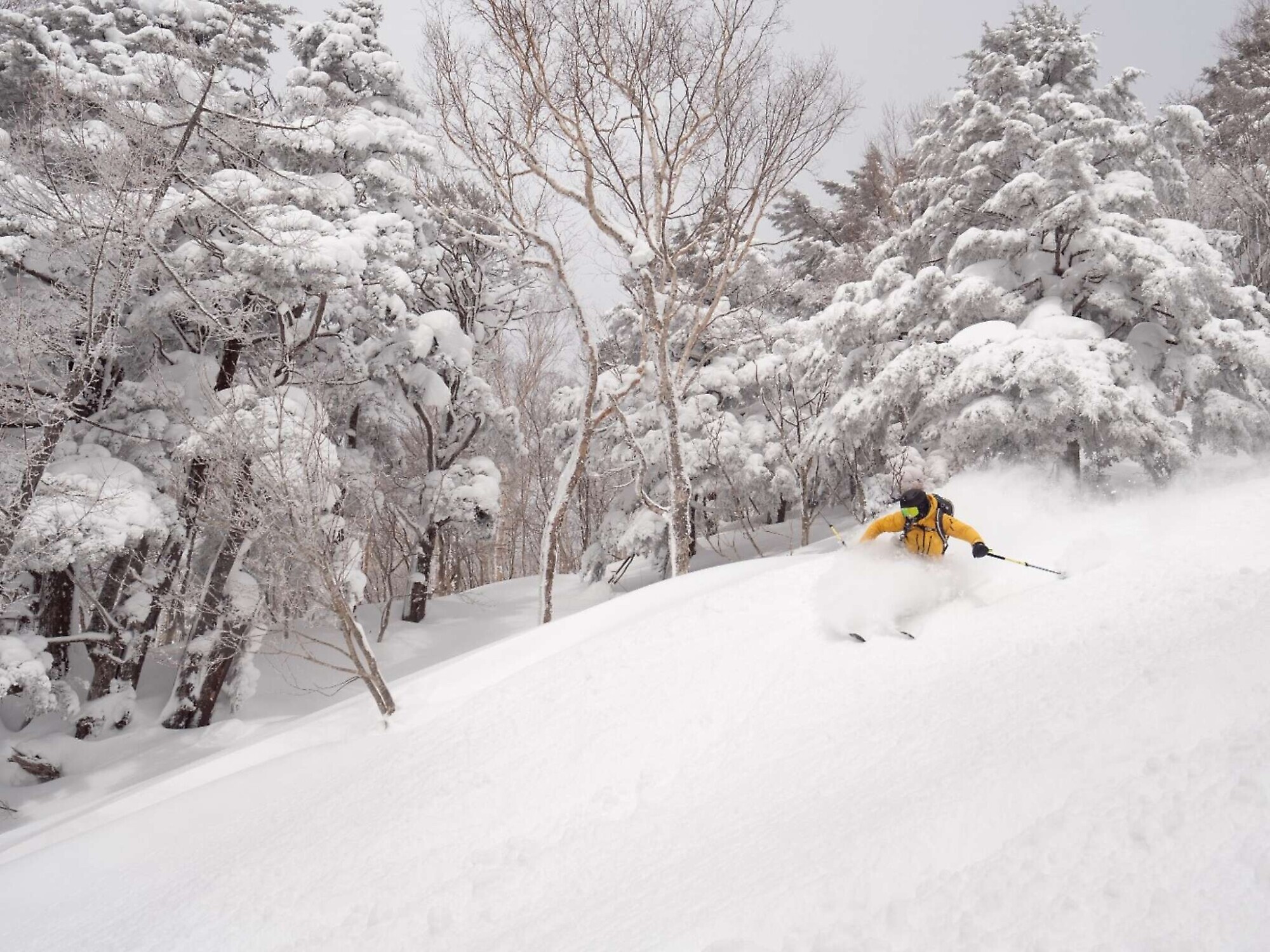
Furano
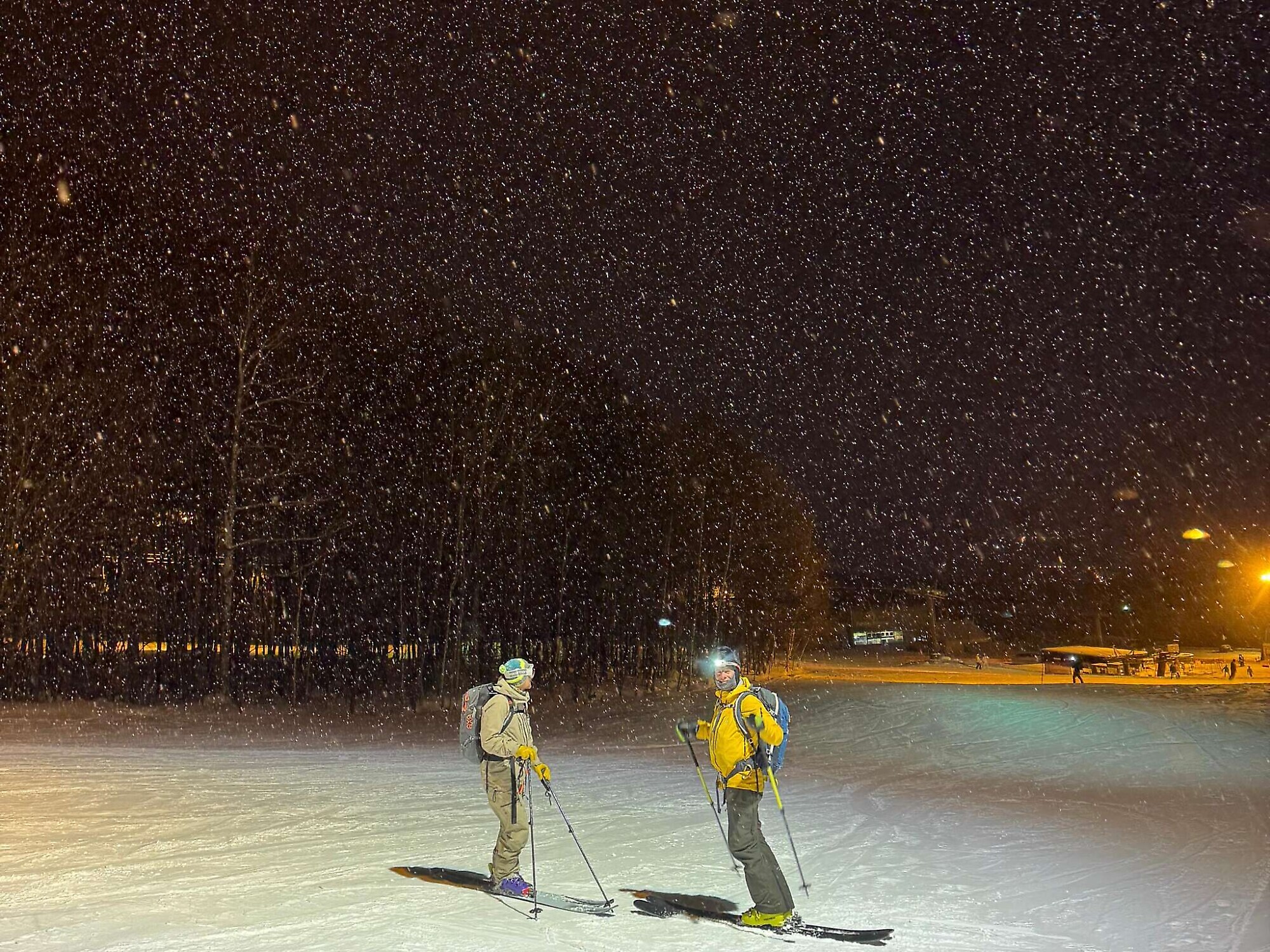
Furano Night Skiing
Asahidake – Volcanic Freeride at -22°C
The cold that preserves the legend: destination Asahidake, the highest volcano in Hokkaido (2,291 m).
A single cable car takes us up toward the upper slopes.
We’re met with extreme weather conditions: the thermometer reads -22°C and strong winds make it impossible to reach the summit.
We “settle” for a few short ascents with skins up to the active fumaroles—an iconic panoramic spot—and then drop down through wide, skiable forests, with deep, dry snow and faces disappearing in face shots.
On the way back, Matteo and Francesco launch off avalanche barriers: the sheer amount of snow makes lines possible that would be unimaginable in Europe!
Dinner is yet another BBQ, which is starting to become an addiction.
Then off to sleep, fully aware we’ve witnessed something surreal.
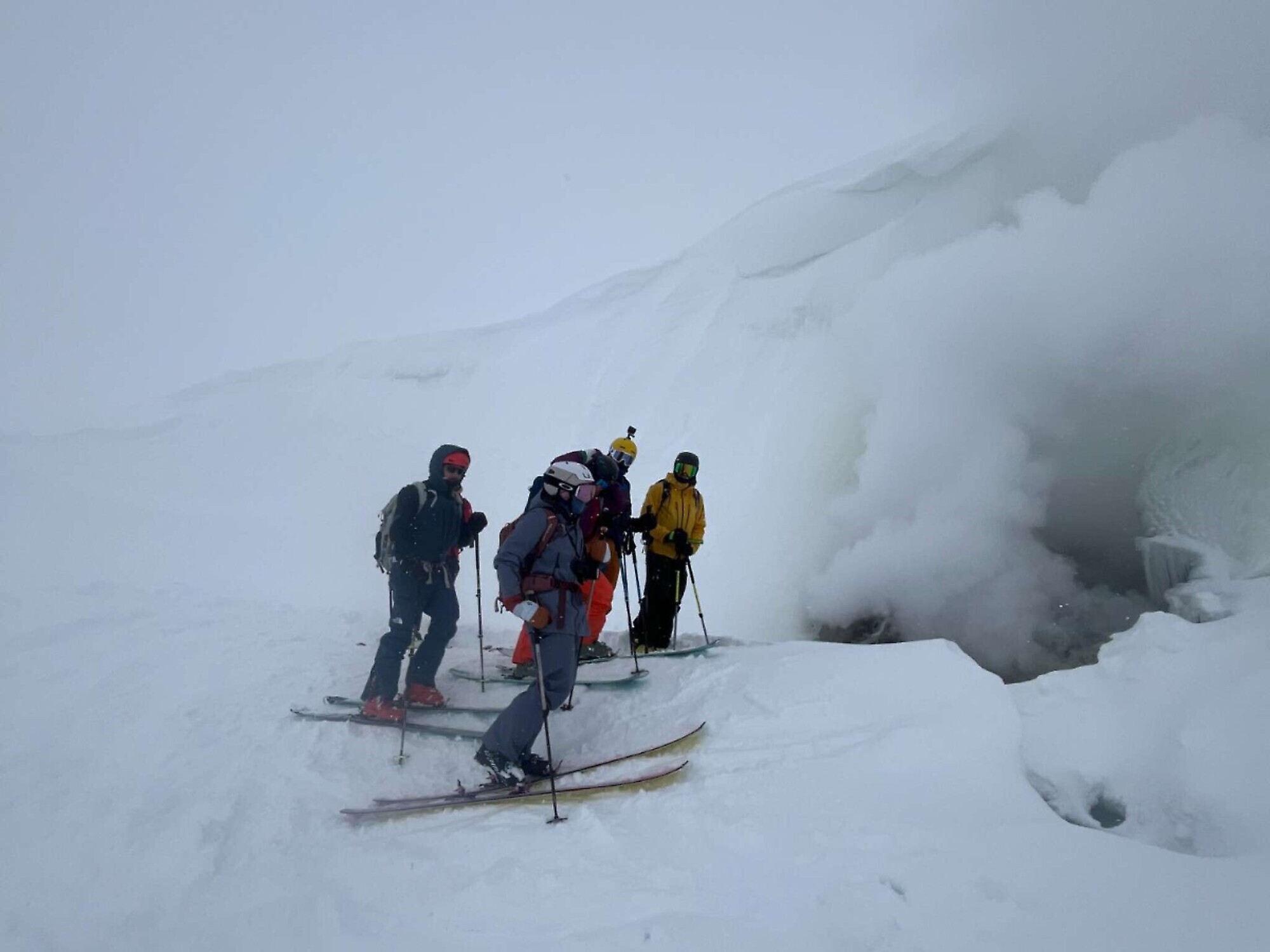
Fumarole attive – Asahidake
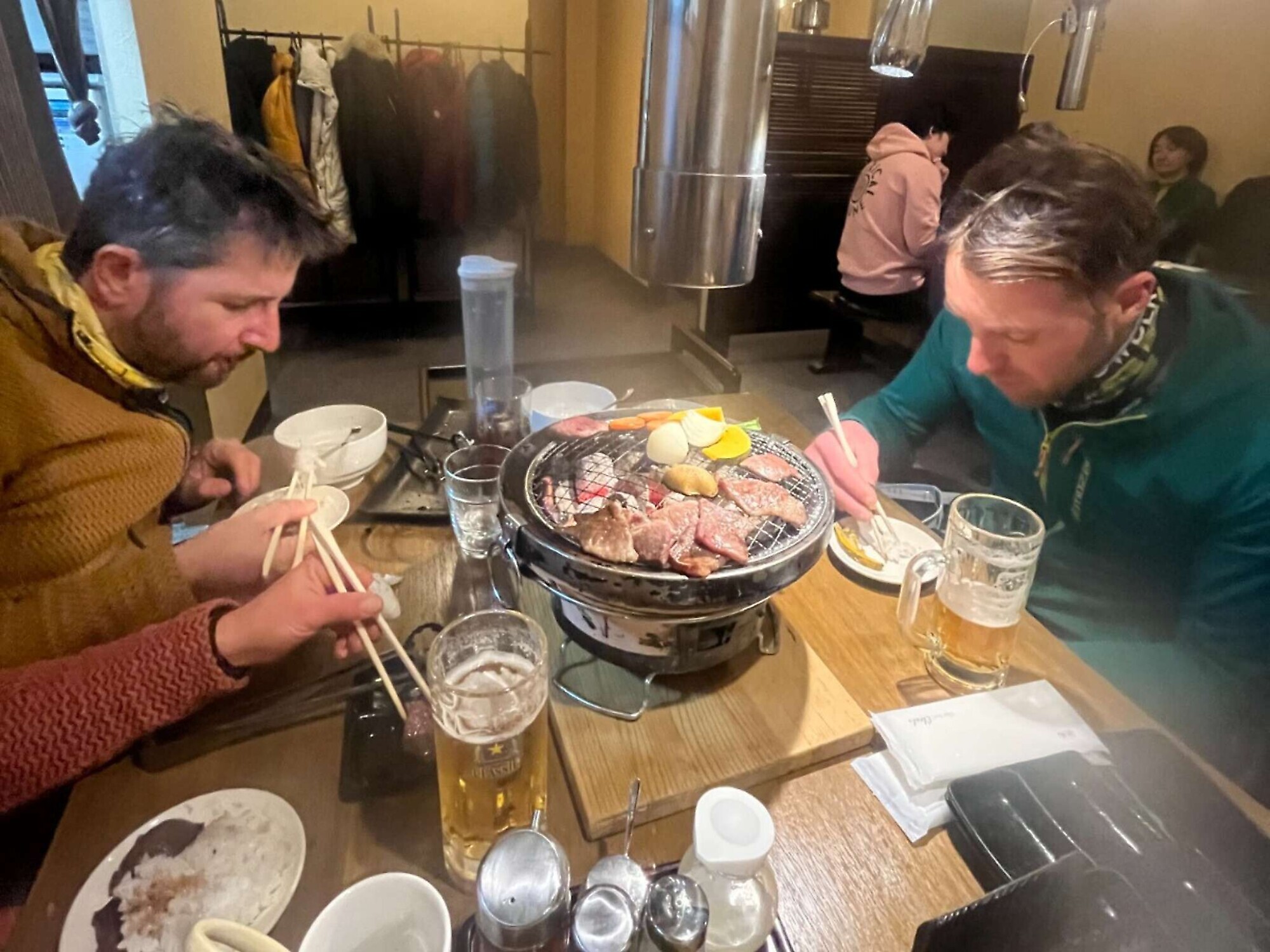
BBQ – Asahidake
Tokachi-dake – Skiing, Trees, and Boiling Onsen
We dedicated our last day in Furano to free touring in Tokachi-dake, a volcanic area.
Starting from the snow-covered parking lot of Fukiage Onsen, we climbed with skins through valleys and forests—perfect terrain for tree skiing.
Light snow, well-angled slopes, and spaced-out vegetation allowed for fast, fluid descents.
After two incredible runs, we soaked in the steaming waters of a natural hot spring.
A dream.
Then we moved on to Niseko, staying at the Epic House.
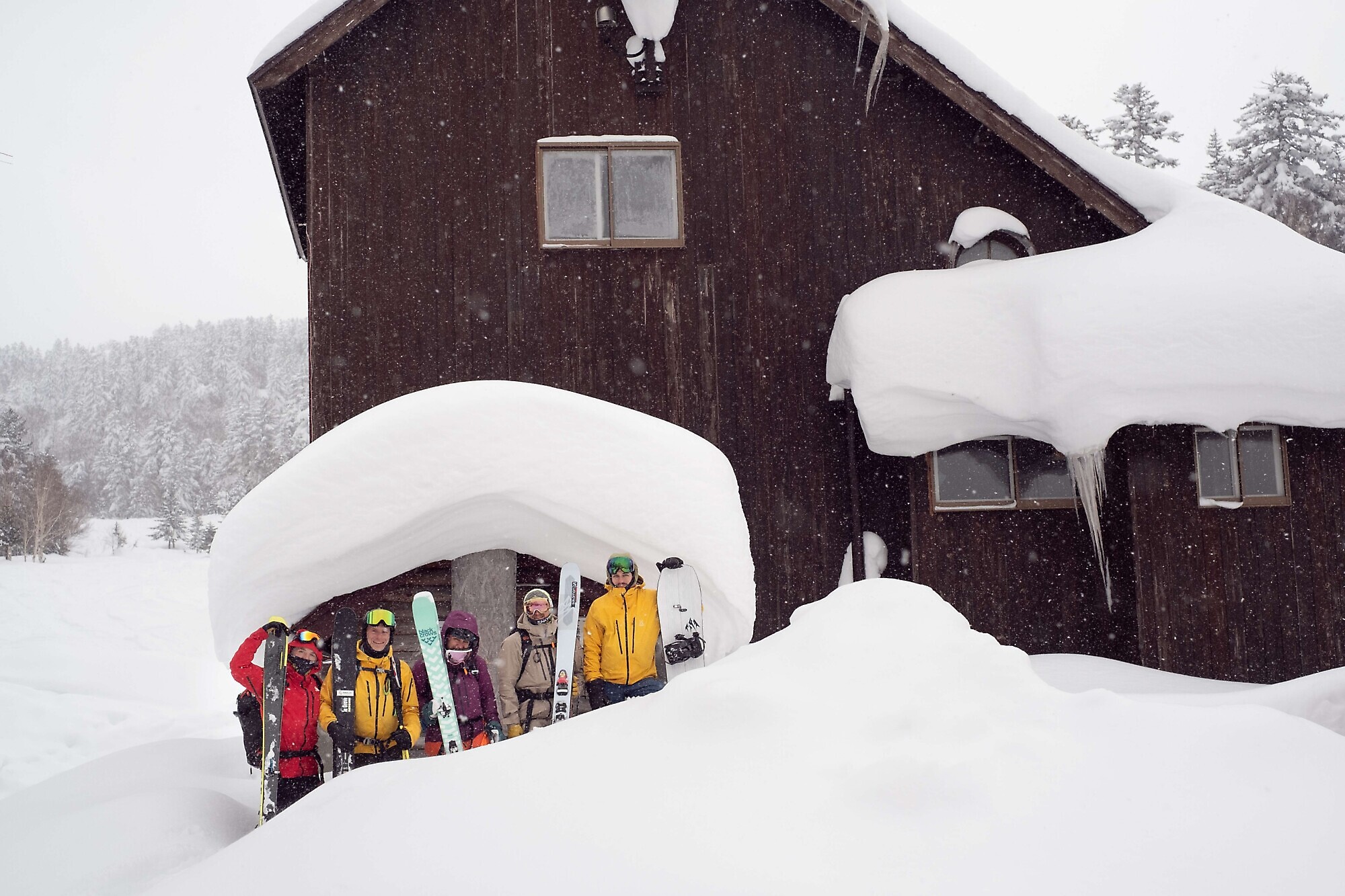
Tokachi-dake
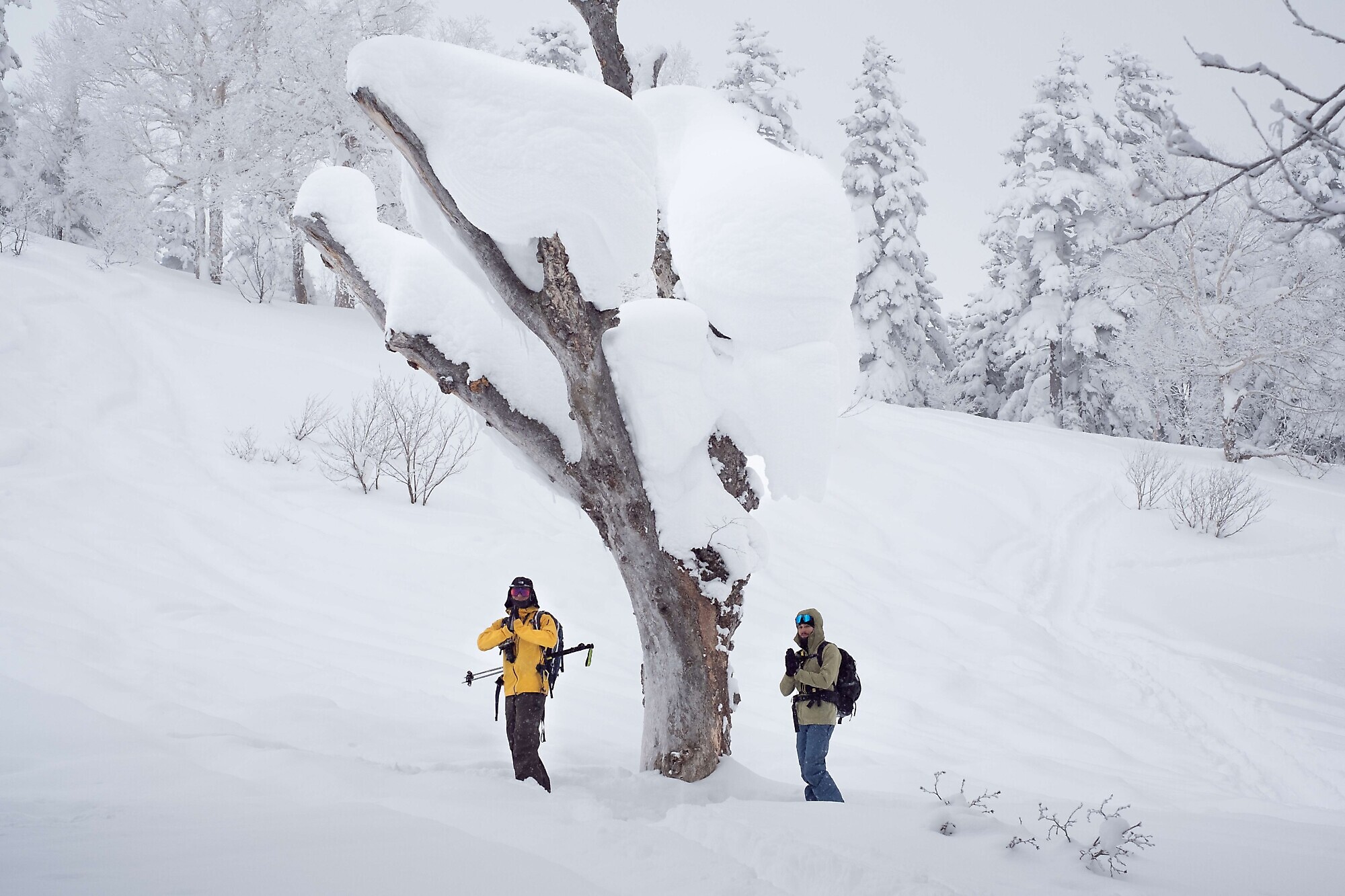
Tokachi-dake
Niseko – The Forbidden Valley, Mount Yotei, and Extreme Snowfalls
Every night, 30–50 cm of fresh snow.
Niseko, the most famous resort in Hokkaido, welcomed us like this: a constant white room.
The ski area was partially closed due to excessive snowfall, zero visibility, and strong winds.
Thanks to GPS map consultation and careful terrain analysis, we identified a remote side valley with about 600 meters of vertical drop: hard to access but offering an exceptional descent, deep in a forest of ancient birch trees.
Steep, technical, untouched.
Every turn was an explosion of powder.
We spent the whole day looping between fun descents and short bootpack climbs—like kids going wild on Christmas night!
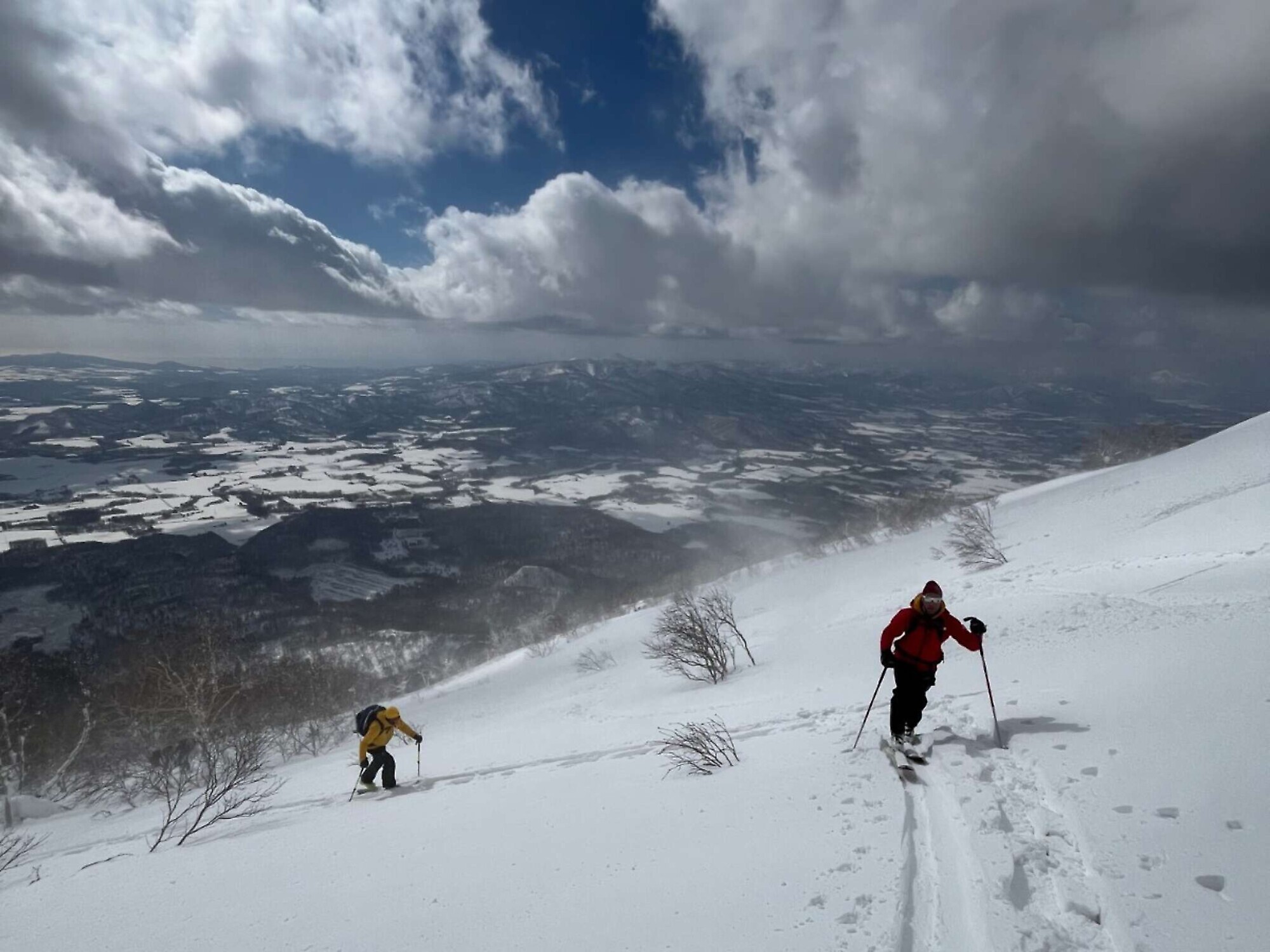
Niseko
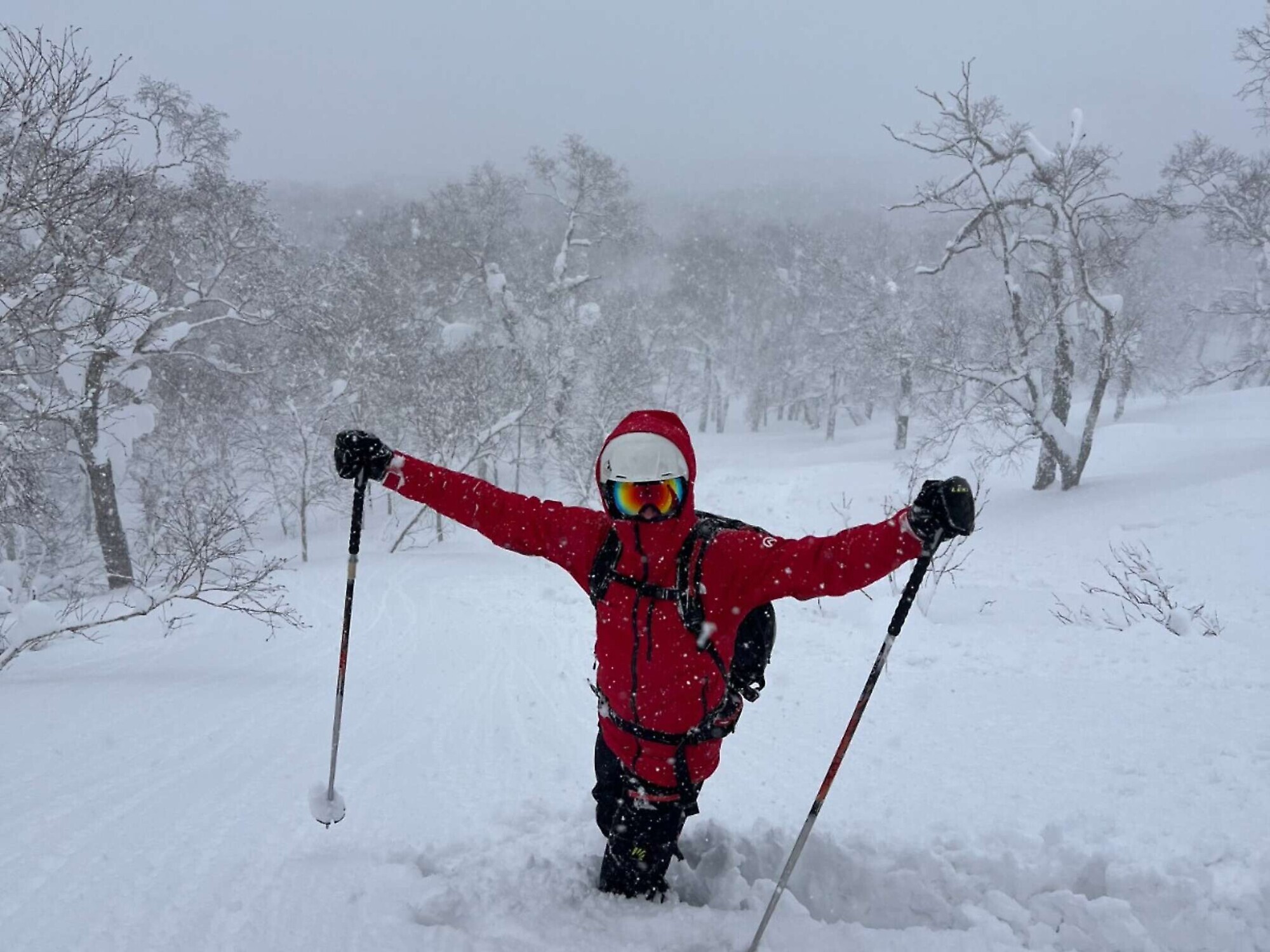
Niseko
Mount Yotei – An (Almost) Successful Attempt
The next day, the weather gave us a break: the sun came out, and we decided to attempt the ascent of Mount Yotei (1,898 m), a stratovolcano with a conical shape, often referred to as the “Fuji of Hokkaido.”
We set off at dawn and climbed for hours through dense birch forests, but wind and poor visibility stopped us 400 meters from the summit.
The descent, however, was spectacular: 900 meters of dreamy snowpack.
Natural drops, steep sections, pillow lines, and dry powder as far as the eye could see.
The volcanic and consistent terrain made it easy to spot descent lines even in less-than-ideal conditions.
Highlight of the day: our mountain guide ended up head-first in the snow after misjudging a bold drop!
Dinner?
Of course—BBQ.
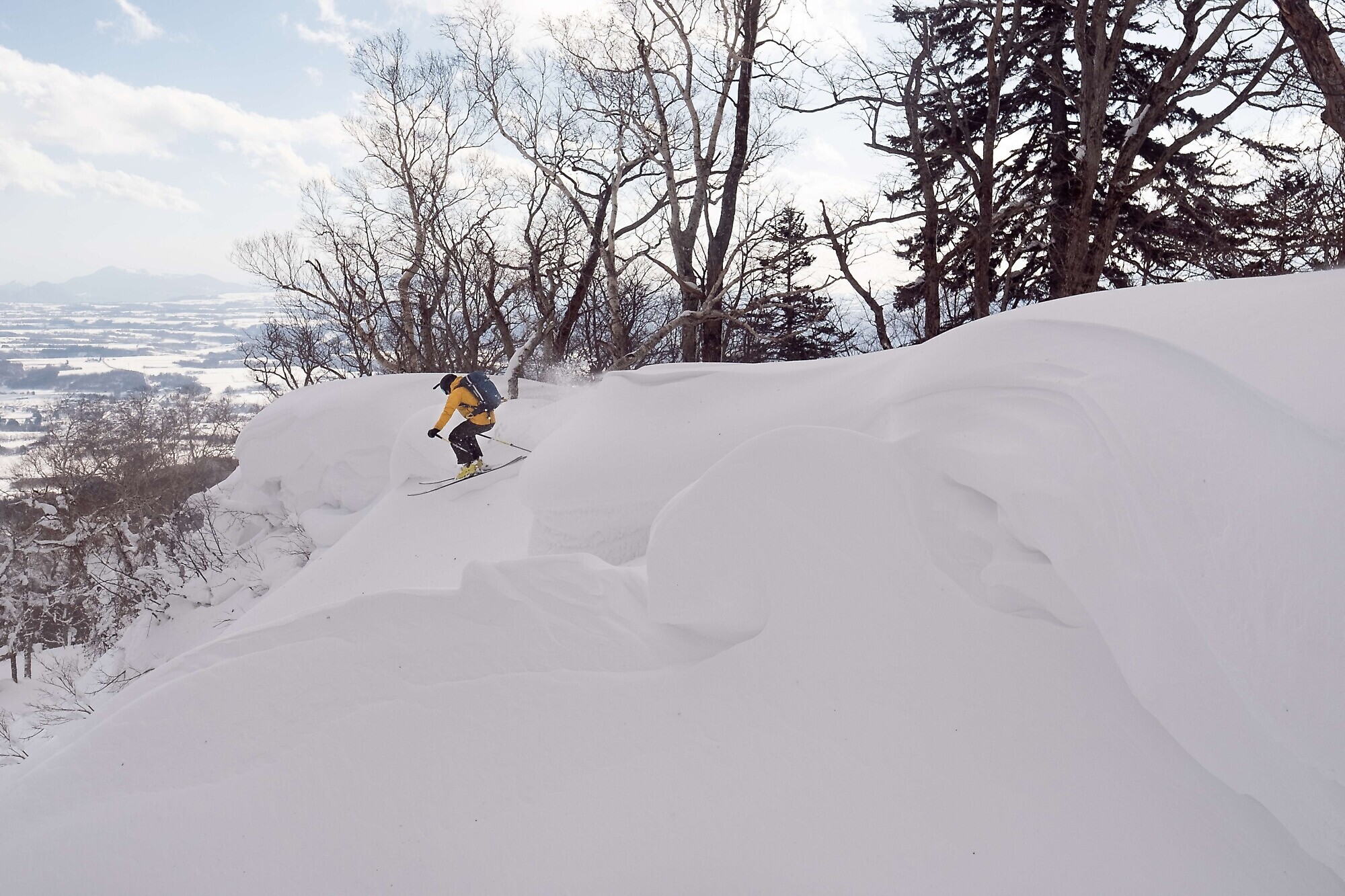
Yotei
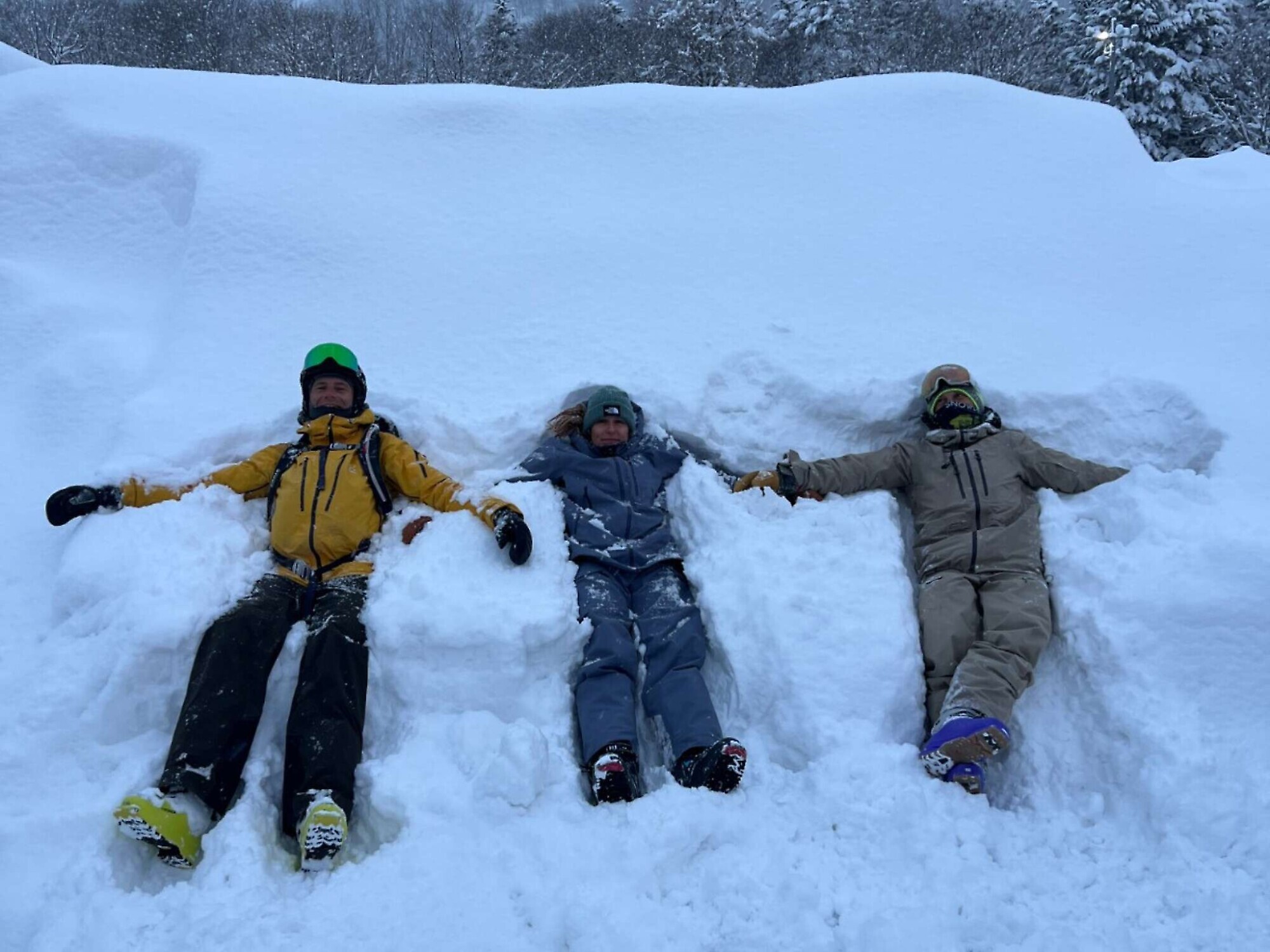
Yotei
Rusutsu – Forests Sculpted by Ice
Final stop up north: Rusutsu, where the ski pass is among the most expensive in Japan, but comes with an incredible lift network featuring heated, covered chairlifts, wooded slopes, numerous steep off-piste lines, and three interconnected mountains.
The wind had turned the trees into ice sculptures, creating a fairytale landscape.
After a few runs in tough conditions, we discovered a secluded valley, reached with skis on our backs and skins for the return.
This was our farewell to Hokkaido, with the deep awareness that we had been incredibly lucky to ski such perfect snow—a privilege hard to forget.
But before leaving, one last stop in Otaru for some mind-blowing sushi.
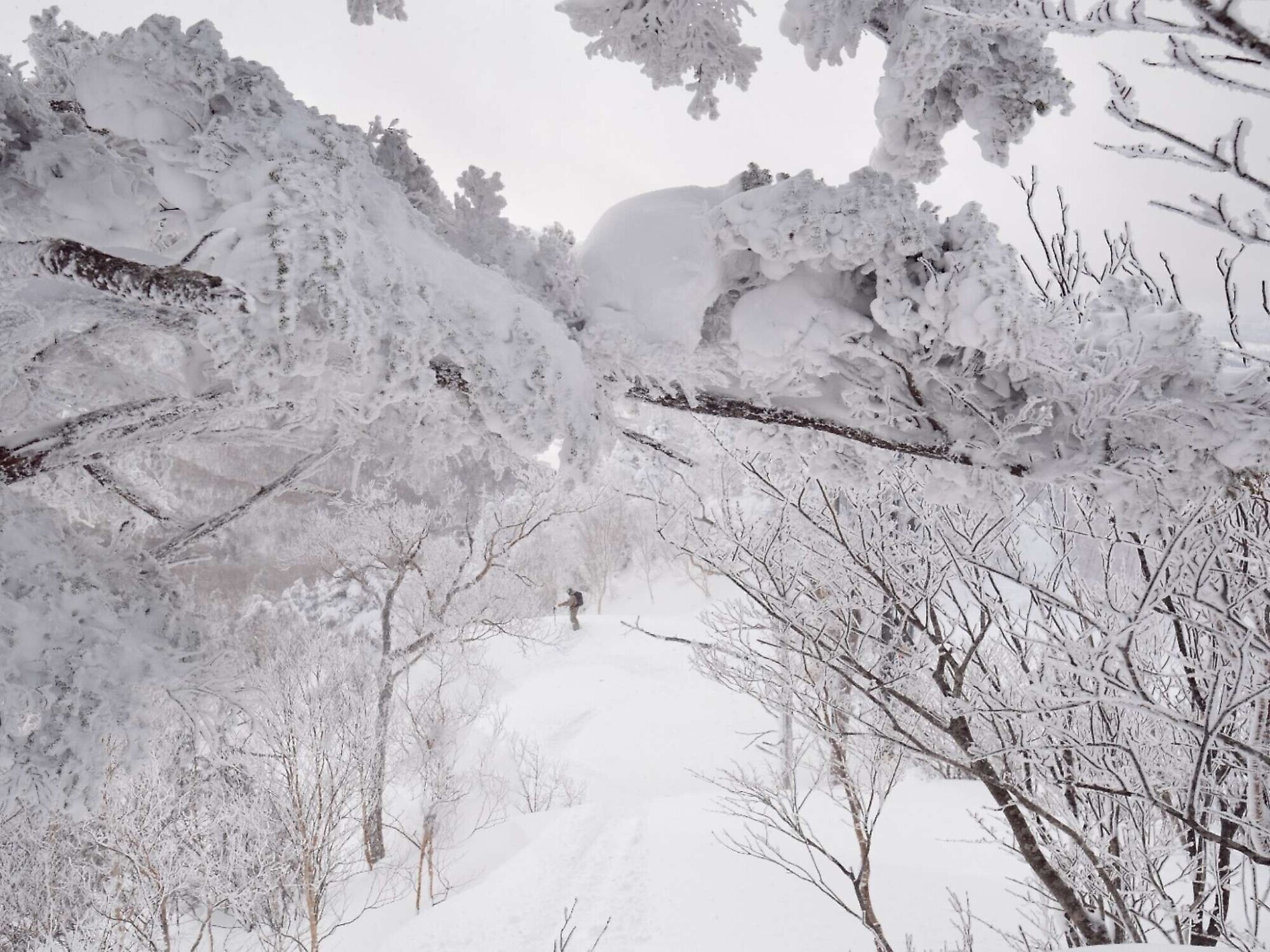
Rusutsu
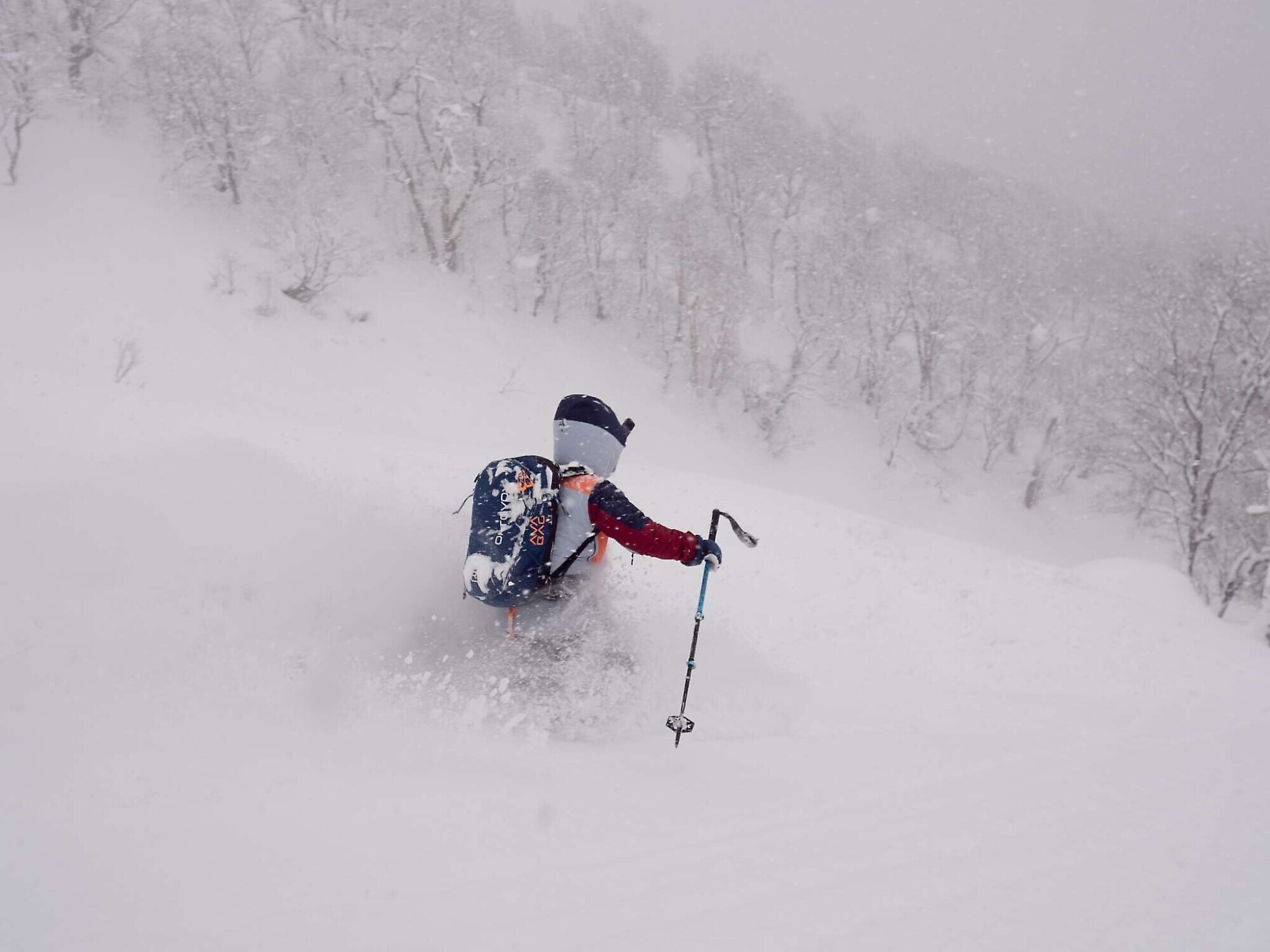
Rusutsu
Nagano – Alps, Onsen, and Hot Spring Monkeys
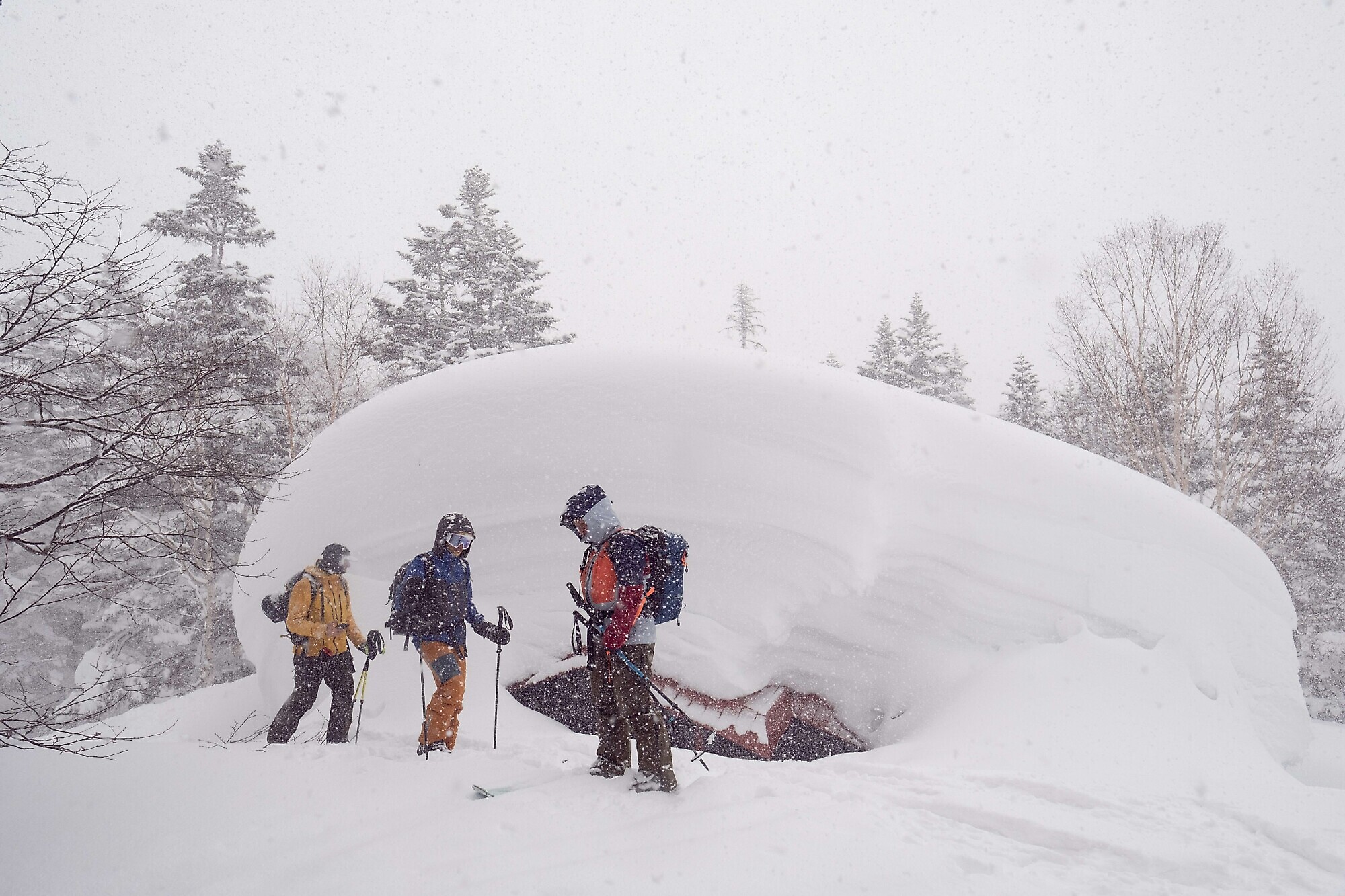
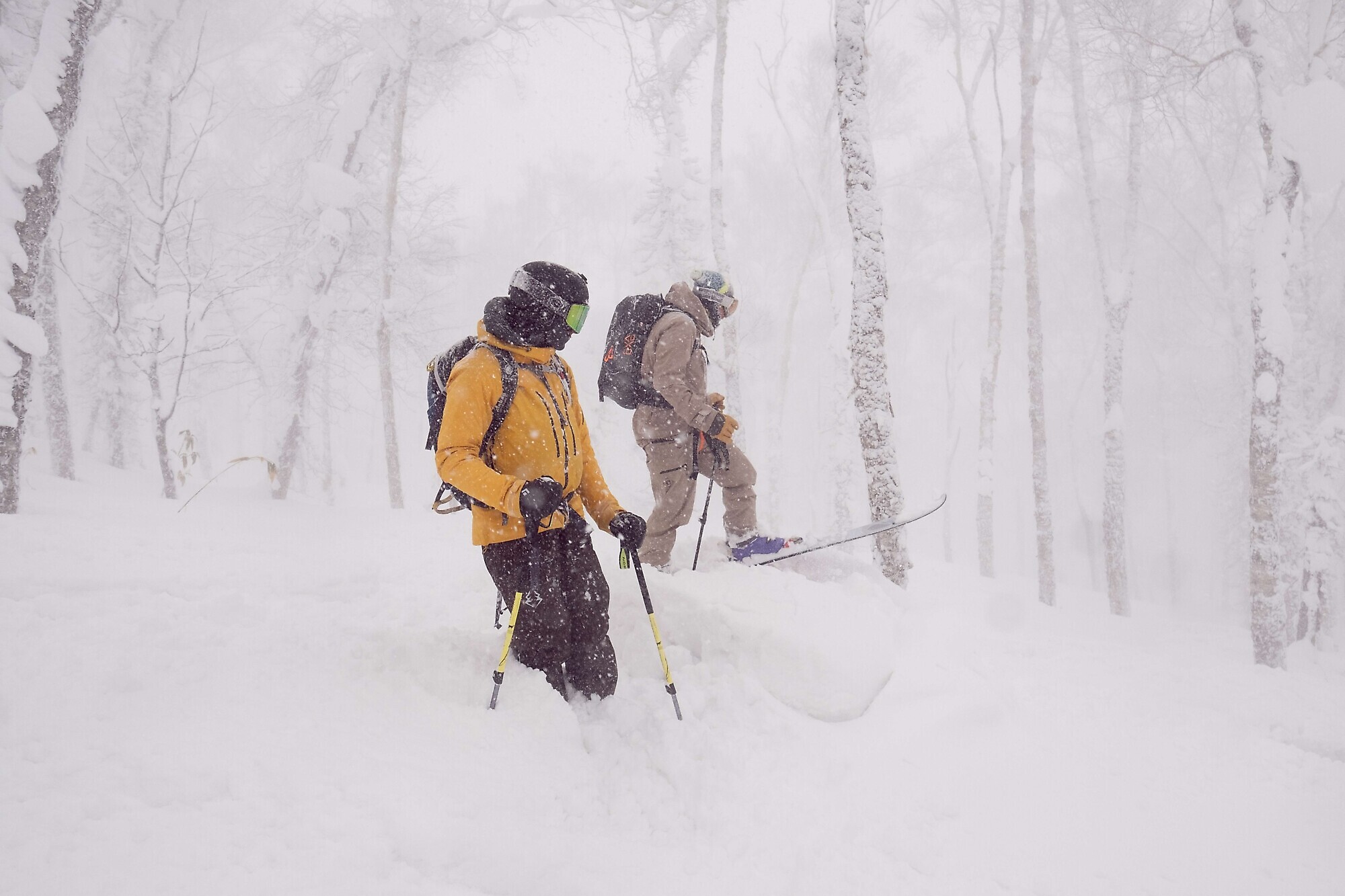
From Sapporo, we flew to Matsumoto and then drove to Hakuba, in the heart of the Japanese Alps.
On the alpine side, the landscape changes dramatically: taller mountains, fewer trees, and more exposure.
Heavy snowfall creates accumulations up to 6 meters—houses buried and roads carved through the snow.
On the first day, the weather was borderline, but we managed to squeeze in a few turns.
We skinned up to Happo-One (closed due to wind), reaching a sheltered area.
A few forest runs, then a forced retreat.
Better to seek comfort in an Onsen.
Men on one side, women on the other: everyone naked.
Ah… Japan!
Nagano
Nagano
Shiga Kogen & Cortina – Authentic and Crowded Japan
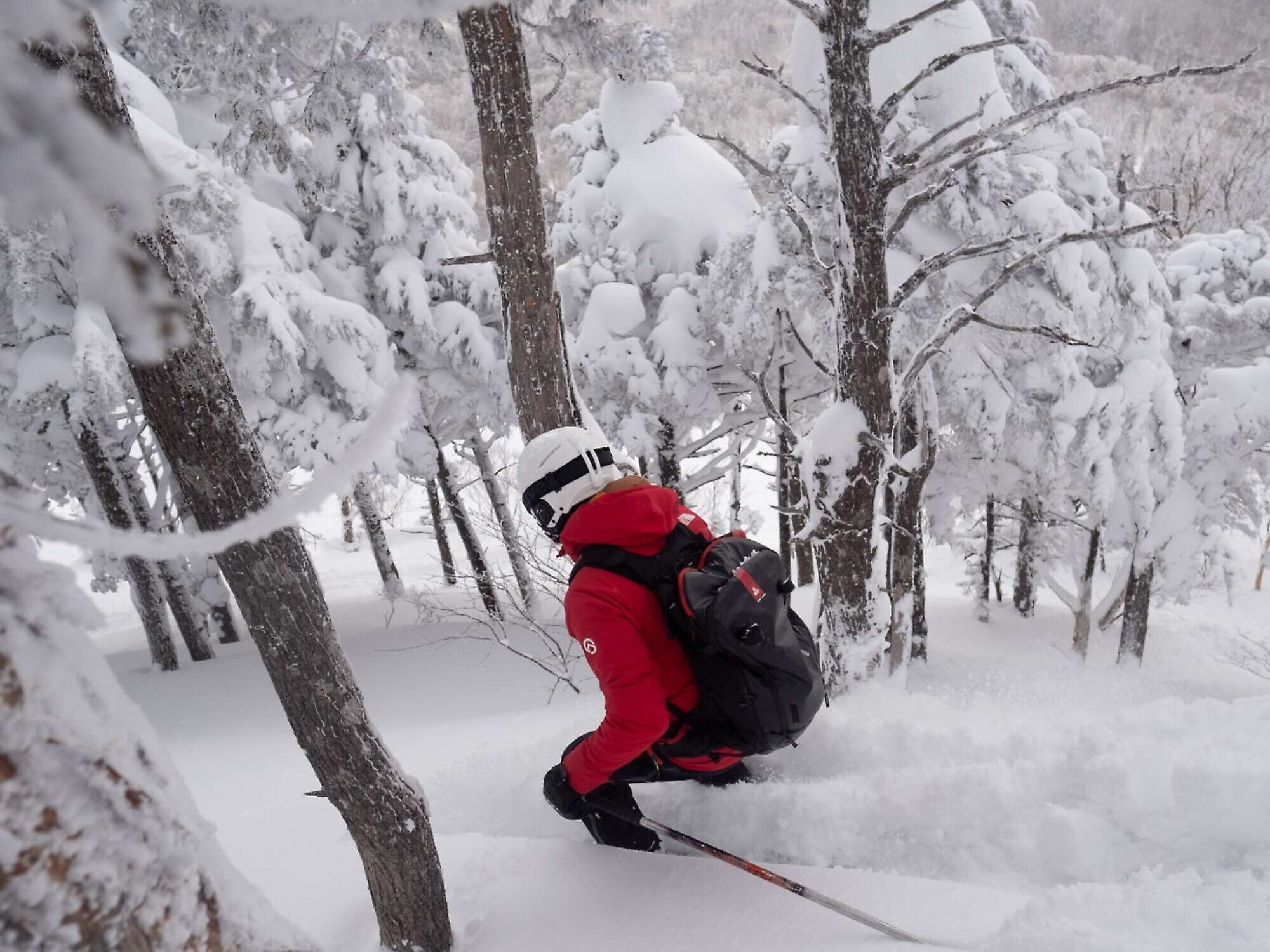
The next day, driven by the desire to explore less-traveled areas, we headed to Shiga Kogen—a small resort frequented exclusively by Japanese skiers.
We discovered a different Japan, where freeride is surprisingly accessible: empty slopes, no tourists, and abundant off-piste terrain right off the chairlifts.
Simple, authentic, perfect skiing.
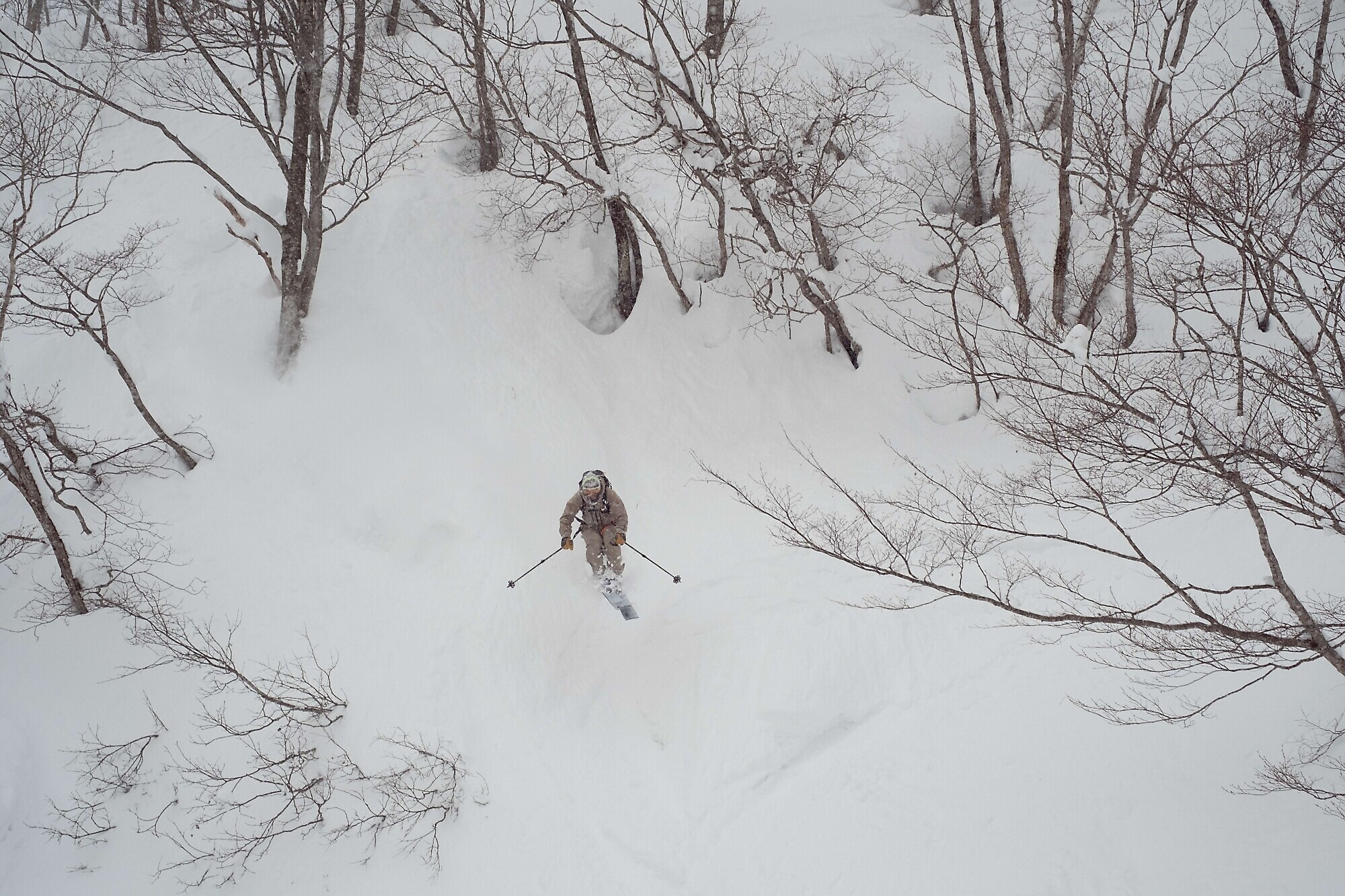
The following day in Cortina (Hakuba), we found textbook conditions: deep snow piling up to the lift cables, pillows, and still untouched lines.
Crowds were heavier, but with a bit of exploration, we still found fresh powder.
Meanwhile, Luca and Francesca—satisfied after their snow feast—went to see the monkeys soaking in the hot springs.
Cortina
Shiga Kogen
Hakuba 47 – Incredible Freeride
For our final ski day, we went full throttle and chose Hakuba 47, Japan’s Big Mountain—famous for its wide, steep slopes and almost no vegetation.
After an initial phase of exploring the permitted areas (WARNING: access to “NO GO” zones is strictly monitored; trespassing can result in your ski pass being revoked and a hefty fine!), a weather window opened, allowing us to reach a secondary peak that turned out to be absolutely insane.
Four runs on untouched terrain, with snow so deep it swallowed entire skiers.
While skiing these open slopes, to the astonishment of our mountain guide, we spotted what looked like crevasses—but since we weren’t on a glacier, they turned out to be “whale mouths.”
Matteo and Francesco took full advantage, launching into wild jumps and vanishing into the white powder.
Stable snowpack and good visibility framed the day perfectly.
It felt like Alaska—but it was Japan.
Feelings?
Unforgettable.
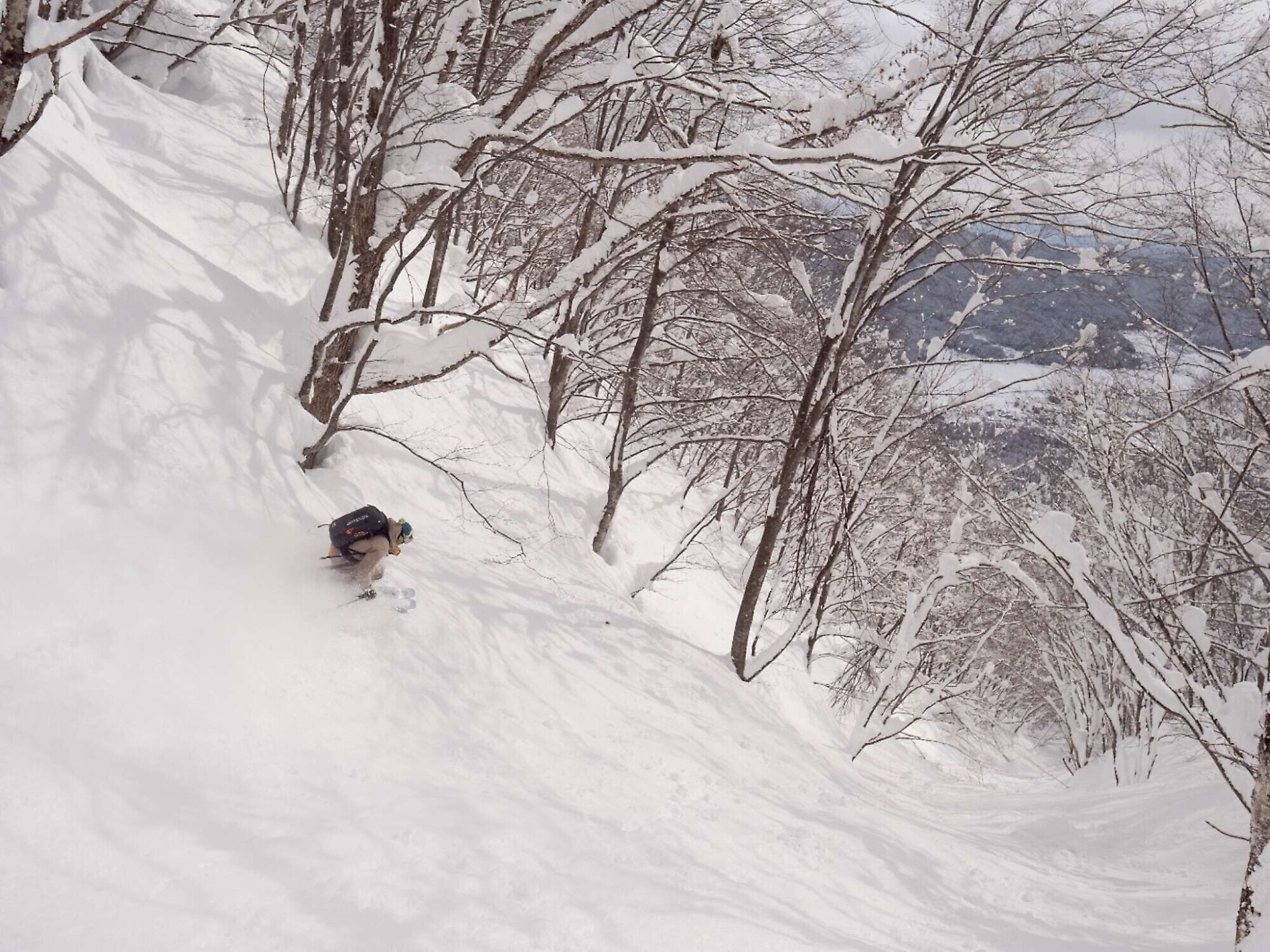
Hakuba 47
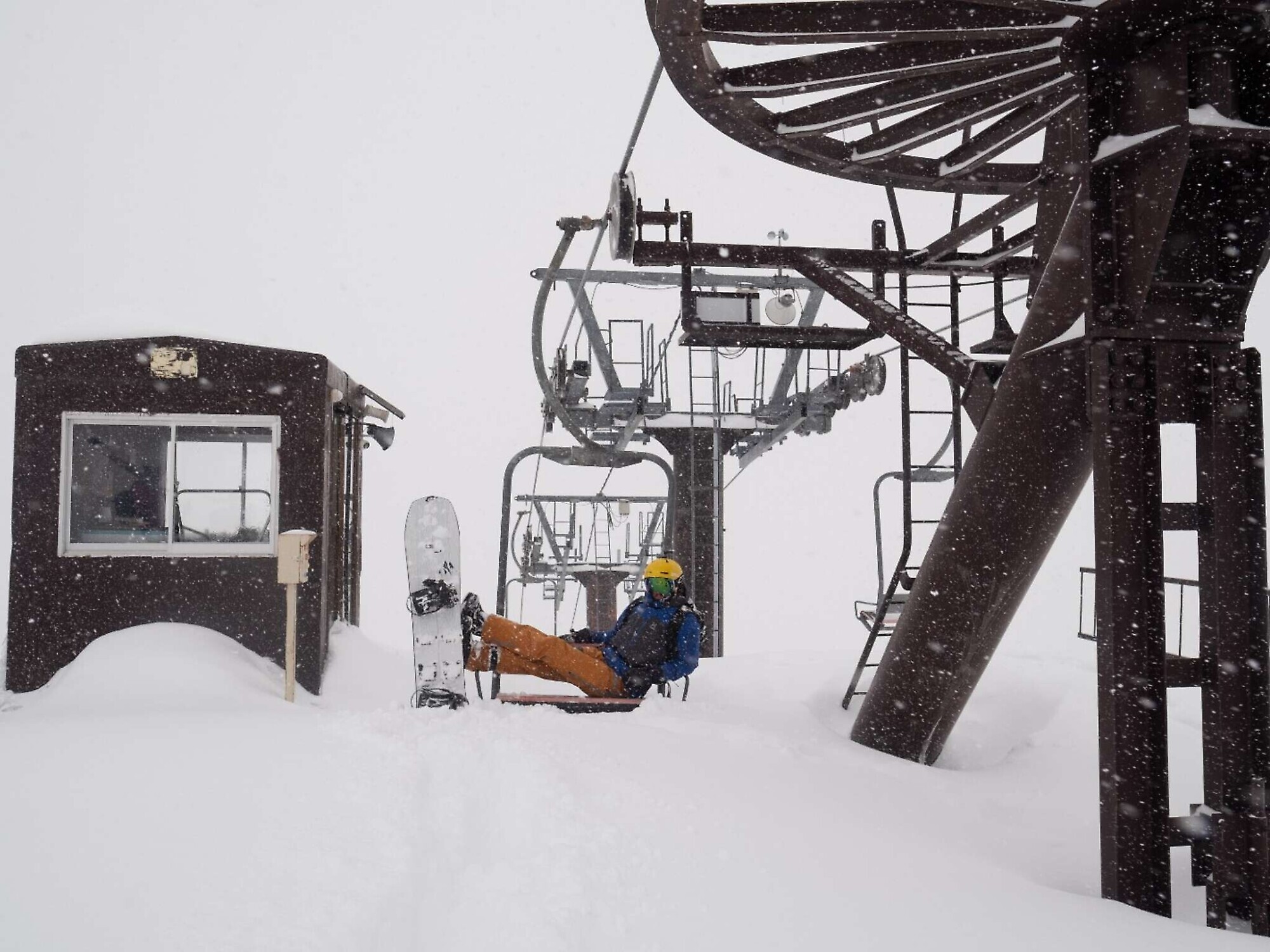
Hakuba 47
Tokyo – From Powder to Urban Jungle
Final stop: Tokyo.
After six hours of driving, we enjoyed twelve hours in the capital.
Futuristic districts, street food, arcades, animal cafés (yes, even owls).
It was the perfect contrast to the wild nature of the past few days.
Then, sadly, it was time to head home.
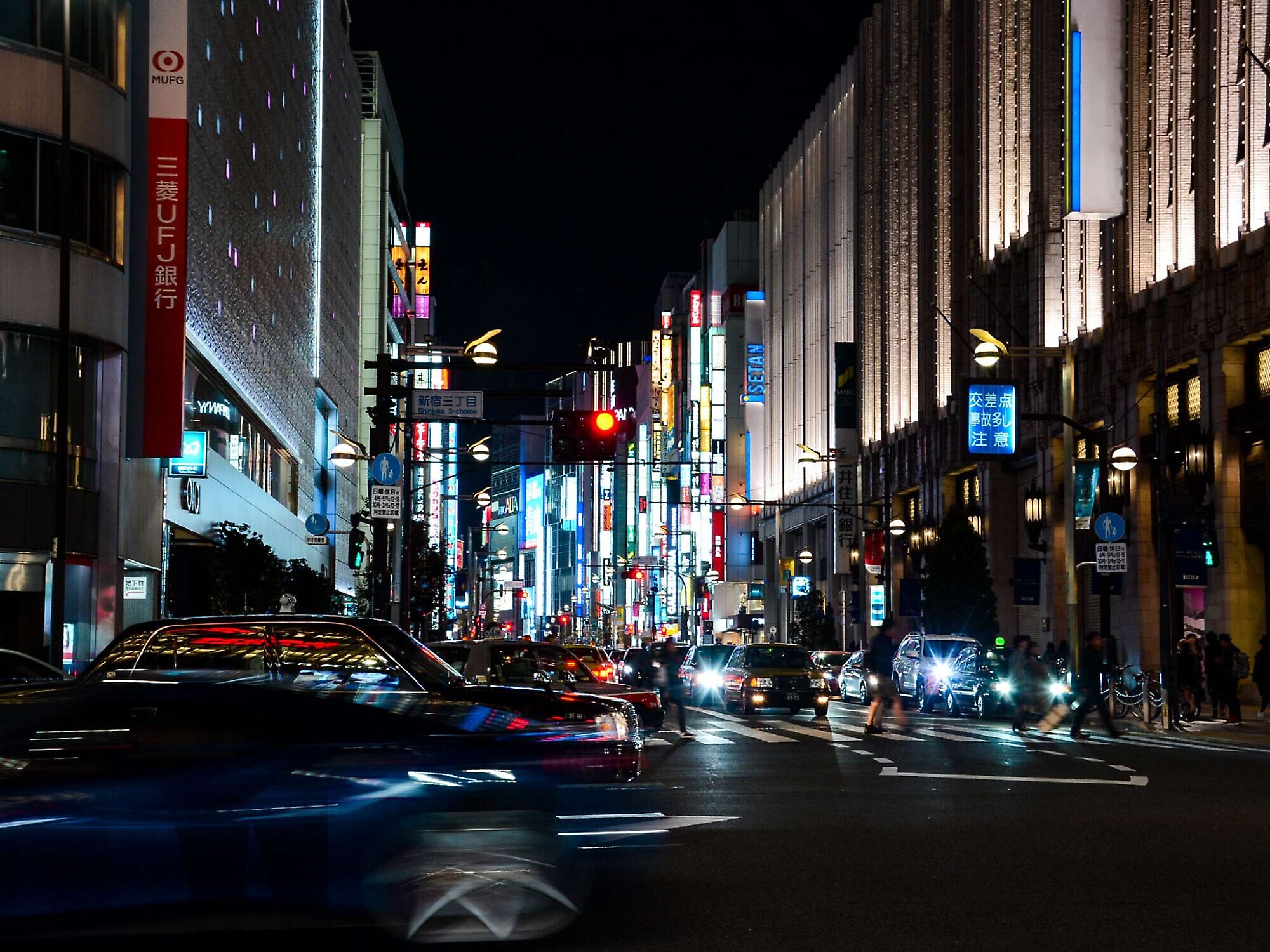
Tokyo
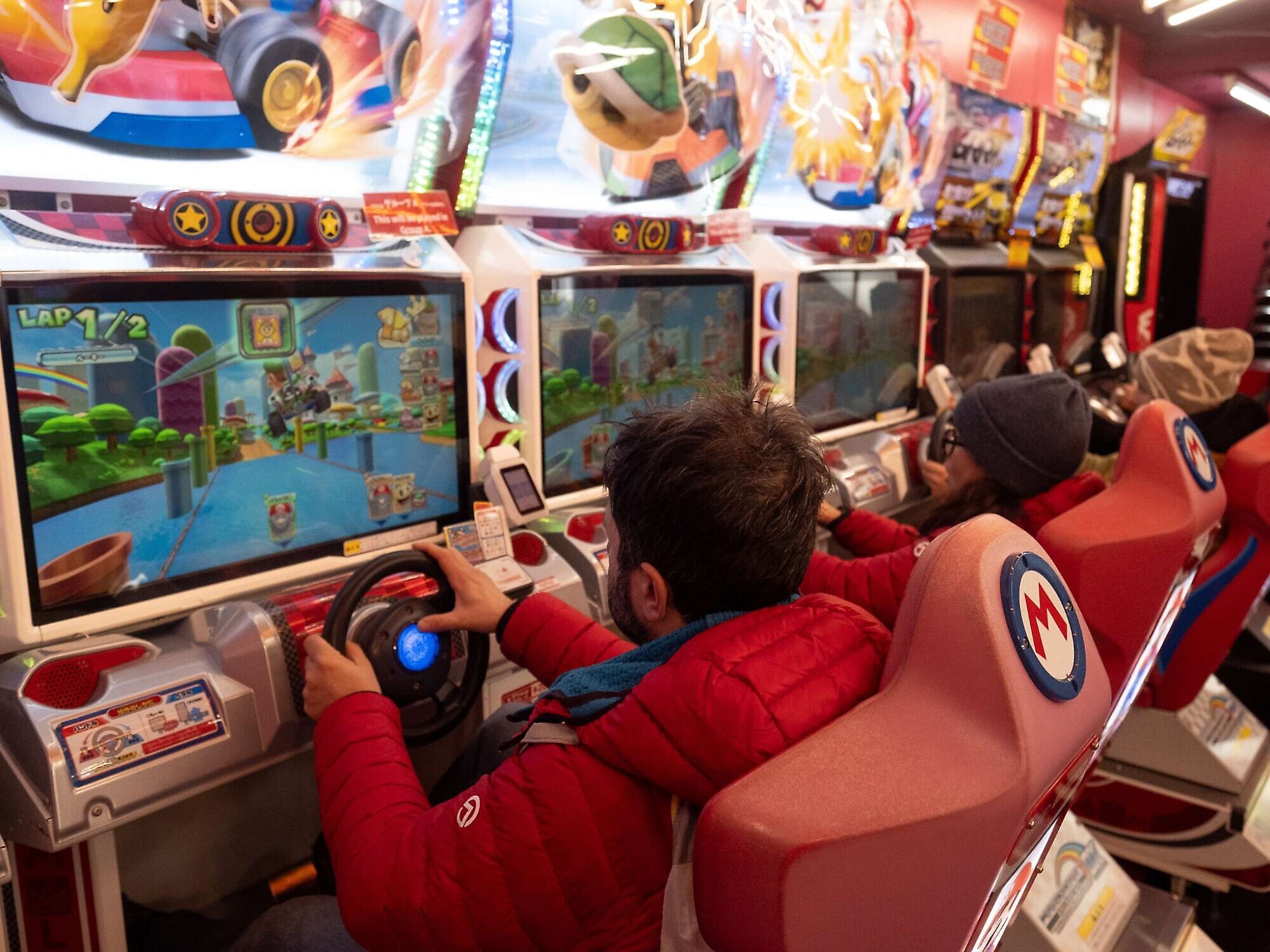
Tokyo
Final Thoughts: Japow, Between Legend and Reality
An epic ski trip that exceeded every expectation.
Freeride, culture, food, friends—and a quantity of snow we’d never seen before.
Japan is another world: fascinating, strict, absurd, yet generous like few others.
The consistency of snowfall, the quality of the snowpack (cold, dry, light), the variety of terrain, and the ability to alternate between resorts, backcountry, and ski touring make this country a must on every serious ski mountaineer’s résumé.
Of course, you have to adapt: language barriers, strict resort rules, extreme weather, and a very different organizational culture.
But it’s worth it.
Japan isn’t just a place where it snows a lot.
It’s a place where snow is revered, and every turn in the powder feels like a small ritual.
For those seeking adventure, unconventional lines, and cultural immersion, it remains one of the most captivating destinations in the world.
And the powder?
Legendary.
The true Japow.
We’ll be back.
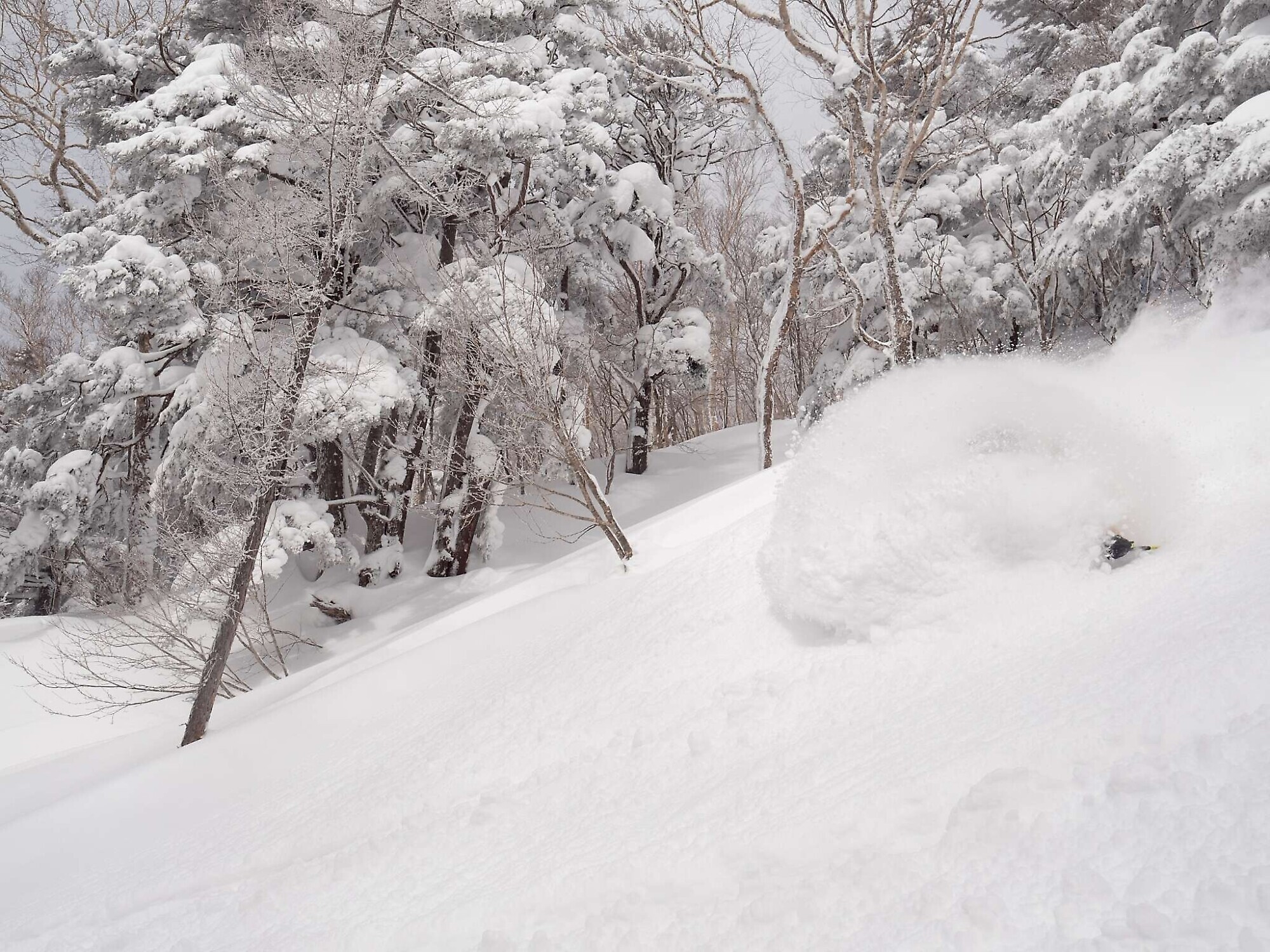
Face Shot

Paolo Pernigotti
Vive a Vernante ma passa gran parte del tempo in giro a sciare e scalare. Dopo aver maturato esperienza nell'heliski, Paolo divide l’inverno tra la ricerca della polvere sulle alpi e accompagnando i viaggi di scialpinismo e freeride in tutto il mondo. In primavera si dedica principalmente allo scialpinismo sui quattromila, mentre l’estate si occupa di alta montagna (Bianco, Rosa, Gran Paradiso, etc.), arrampicata e canyoning. L’autunno è dedicato alla scoperta di nuovi spot per lo sci e l’arrampicata per poter proporre sempre nuove avventure. Dal 2015 collabora con Salomon come Ambassador.