 English
 Italian
Kyrgyzstan, February 2015
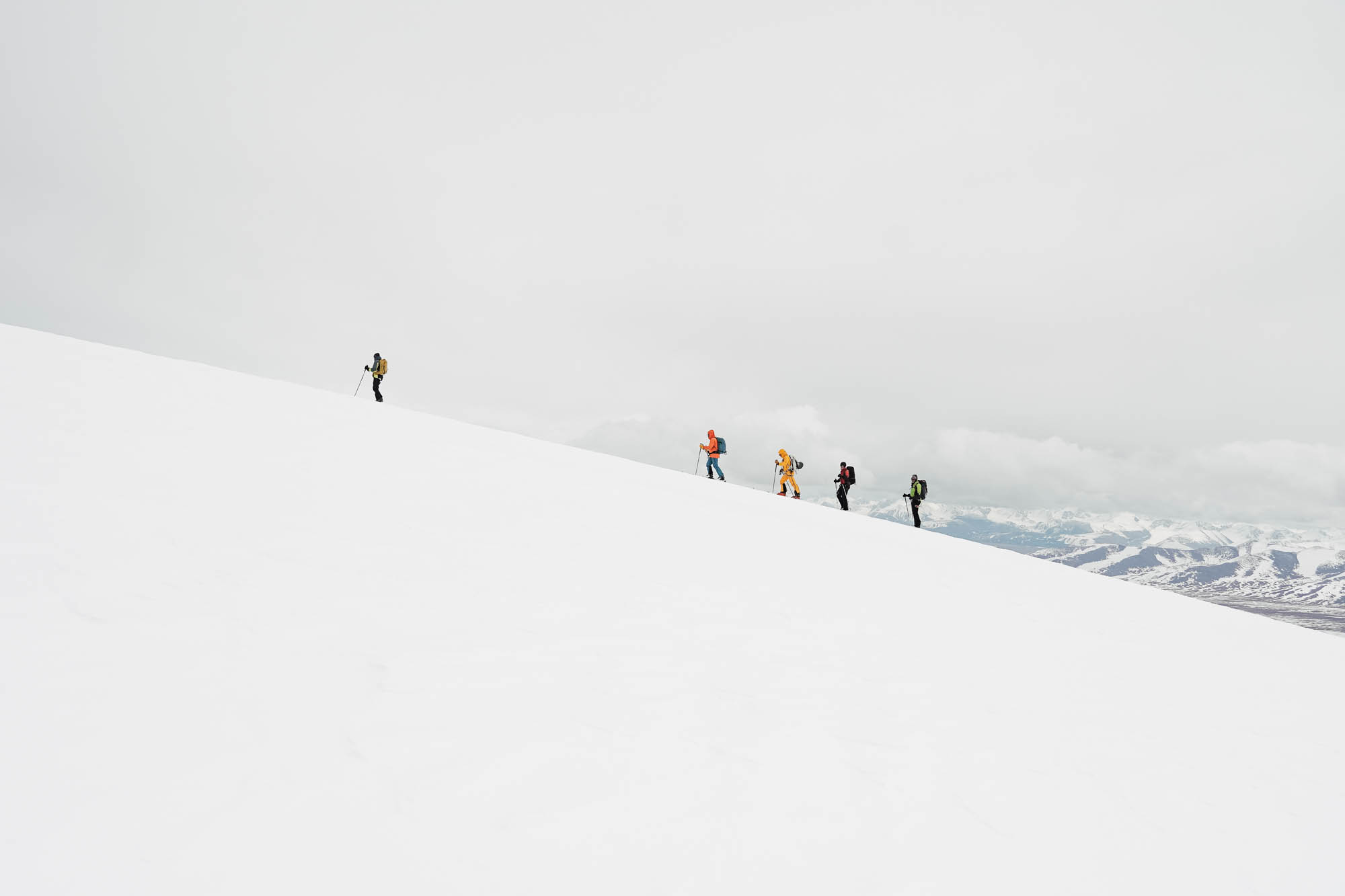
A colorful dot lost in an immense white expanse with subtle blue hues; behind it a straight track in the snow cover: no horizon at the end, no starting point for that track which begins in an undefined place at the bottom right of the photo and heads toward the top left.

© Snowder
That dot is me, trying to find a route that allows me to cross the immense false flat and access the summit slopes of an unexplored peak, one of the many belonging to this vast Teskey Ala mountain range, which extends for hundreds of kilometers in the heart of Central Asia.
Kyrgyzstan, April 2024
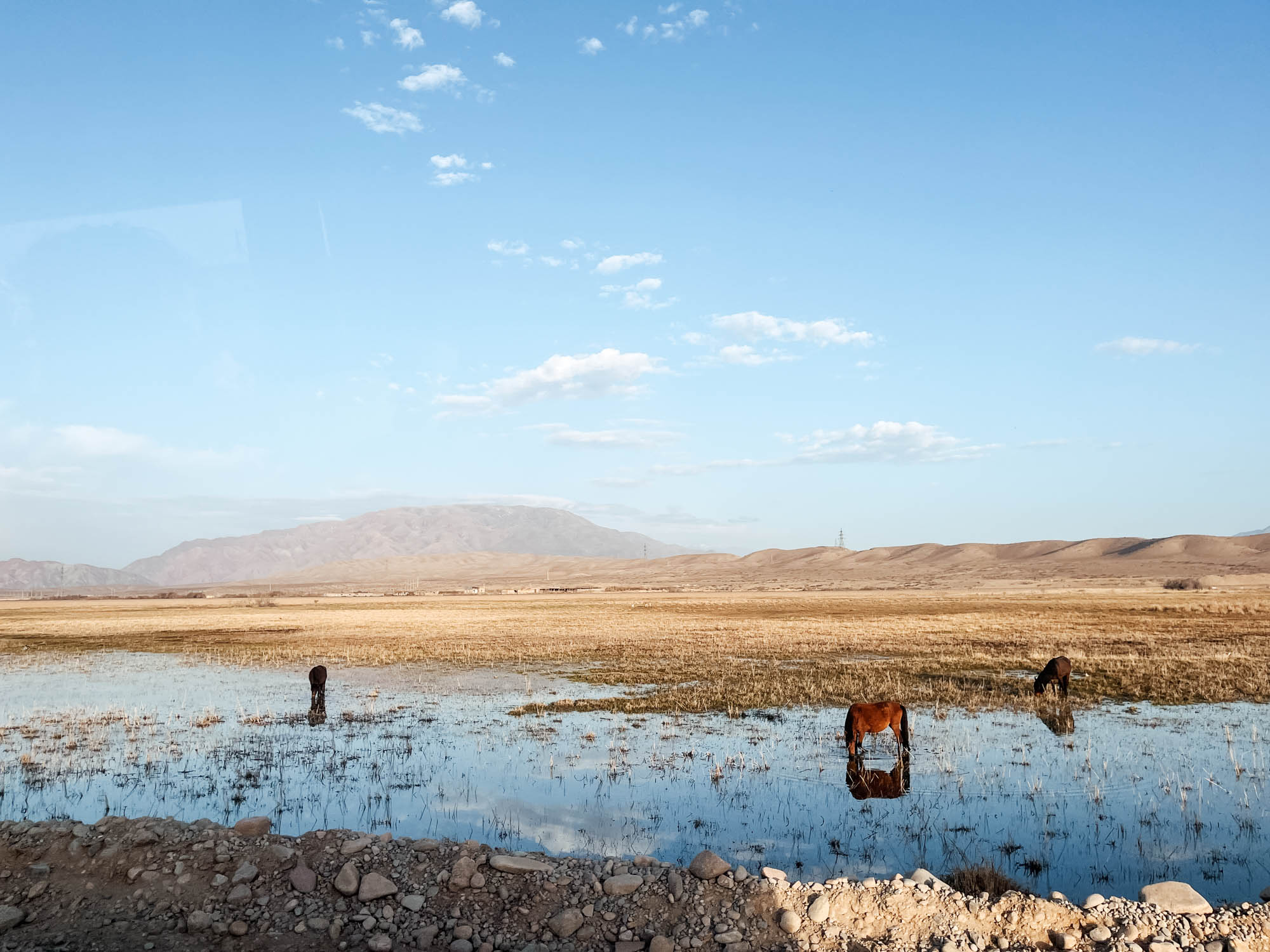
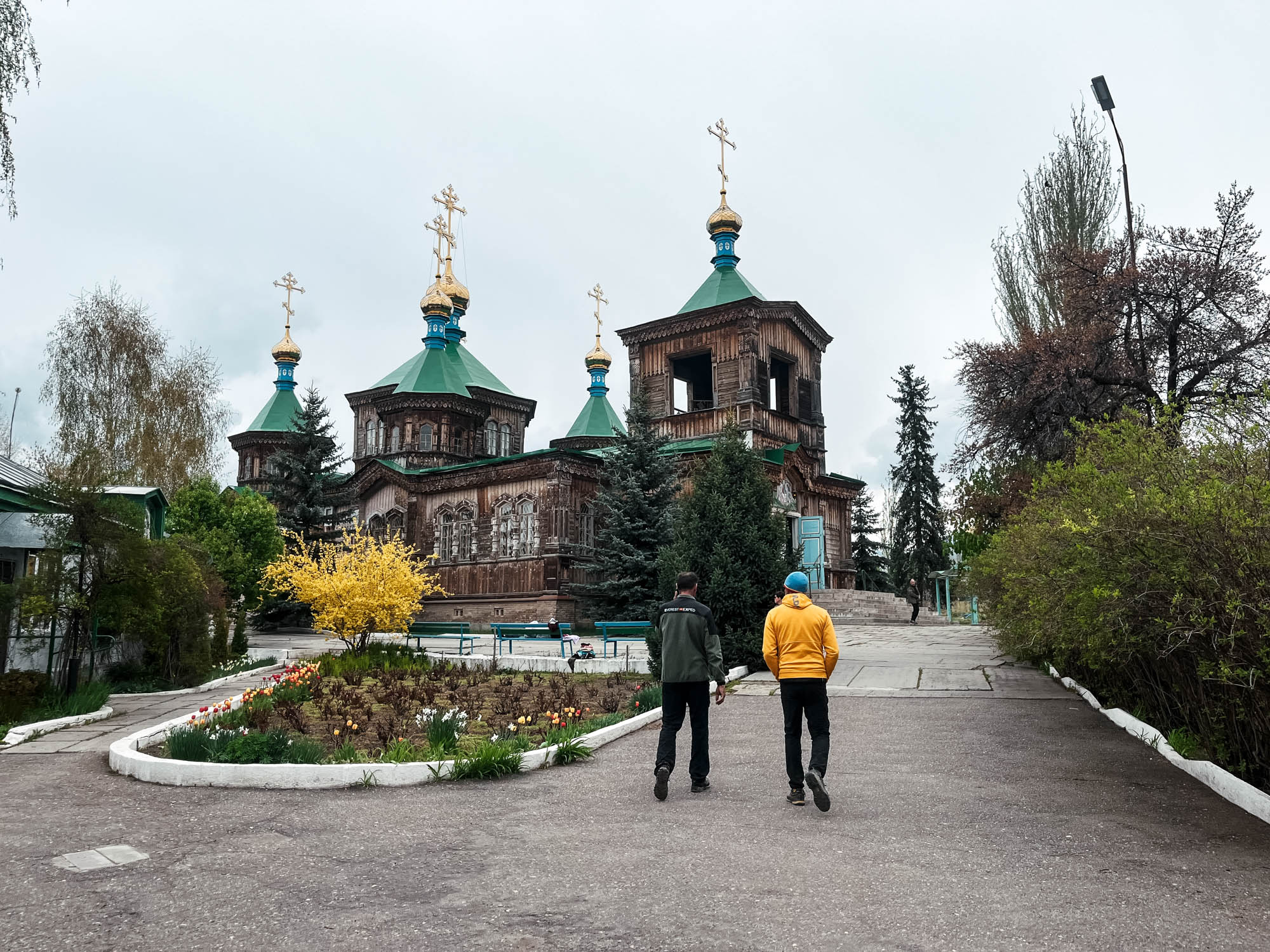
Early morning, the van struggles at unsuspected speeds along the wide dirt road that climbs the Arabel valley. Along the roadside, villages and isolated houses, cattle, horses, a herd of yaks—all extremely thin—reveal the poverty that reigns in these remote places, on either side of which the slopes rise steeply to over four thousand meters.
© Snowder
Remnants of the Russian occupation, like the bust of Yuri Gagarin placed for propaganda in the middle of nowhere, fully convey the sense of abandonment that the people of this nation have suffered due to various governmental divisions. Higher up, now well above three thousand meters in altitude, a man standing in the middle of the road forces us to stop at a switchback. Just beyond, large boulders are falling onto the road: only then do we realize that a huge excavator is working at the switchback above for maintenance, in complete disregard of the most basic road safety management rules.
The road is quite busy, constantly traveled by small trucks loaded with livestock, work vehicles, tankers… you’d think all this movement was heading toward nowhere, but up high, at about four thousand meters in altitude, there’s the second largest gold mine in the world, where about 14 tons of the precious mineral are extracted every year; that explains everything! In truth, this road—which is certainly useful to us, allowing us to start comfortably each day for our trips above 3,800 meters in altitude—is a real environmental disaster: the old dirt road—which followed the mountain’s folds all too harmoniously—has practically disappeared, villages divided in two by bulldozers, not to mention the cyanide tanker that overturned into the river in 2013 due to a drunk driver, which irreparably polluted the river, annihilating wildlife, livestock, and people with consequences that are still visible today.
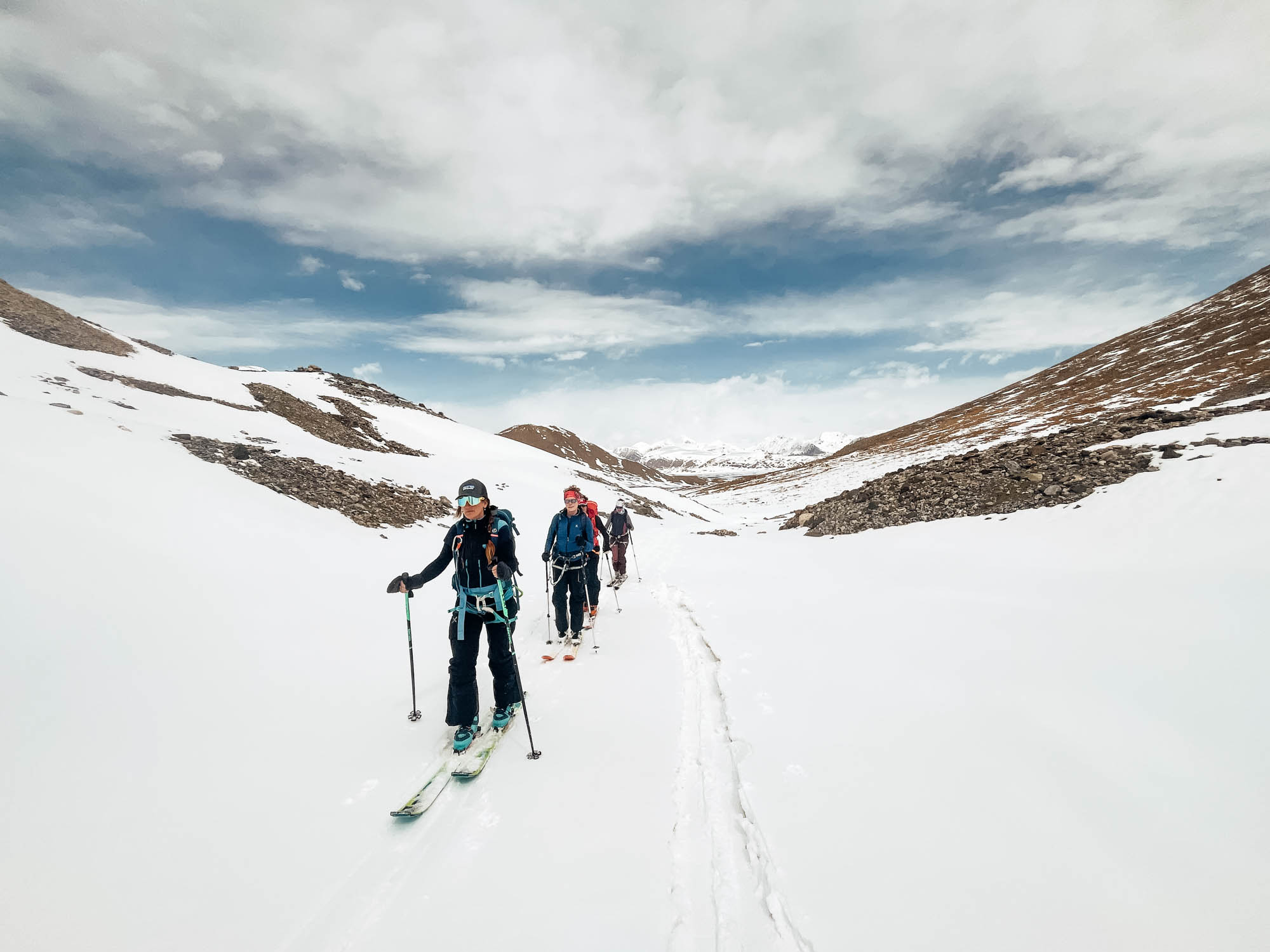
We, on the other hand, are like little princes in a skier’s dream country. Thanks to the local organization, impeccable as always, the guest house hosting us is quite charming and in its simplicity clean and well organized, with good food and more than decent rooms on the shores of Lake Issyk Kul. Once again I’m working with Nikolaj, a Kyrgyz colleague with whom we’ve skied as far as the Siberian Mongolian Altai, whose serene calm makes everything easier even in these remote places where the slightest breakdown of a vehicle can prove to be a real problem. Thanks to his guidance, we make the most of every available day, almost immediately stopping consulting weather forecasts which certainly get it right, predicting some variability each day, corresponding to the alternation of sun, clouds, light snowfall, and clearing that we regularly encounter during our trips.
© Snowder

© Snowder
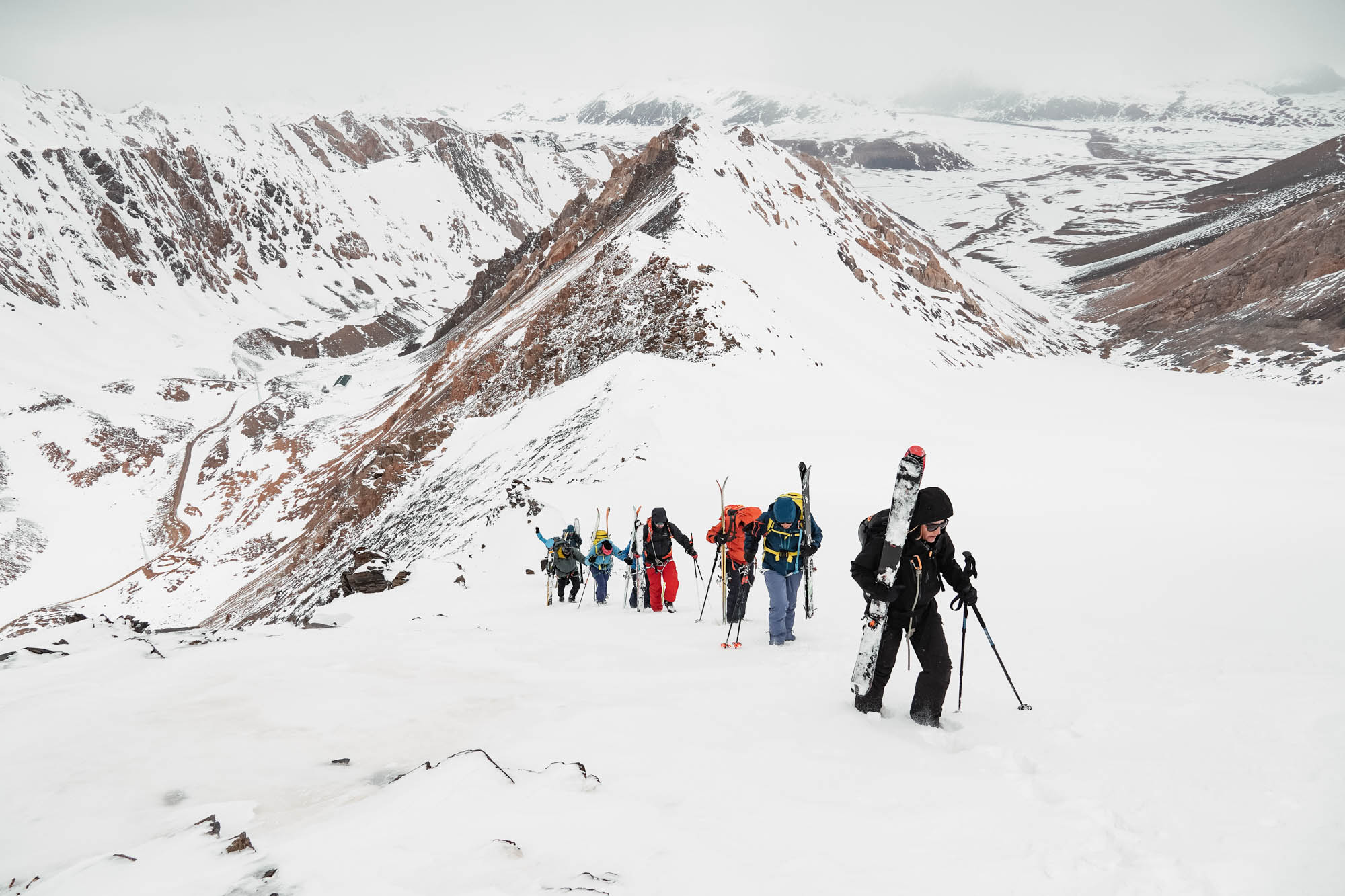
The environment is magnificent, made up of countless peaks nearly five thousand meters high, many of which are difficult to reach simply because they’re too far from the vast plateau reached by the road: ski touring here consists of a multitude of routes of incredible variety but always perfectly skiable, which often begin by climbing glacial tongues almost never crevassed and then reach passes and peaks along sometimes sharp ridges. Skiing in the Arabel Mountains means finding transformed snow very often covered by a layer of recent powder snow, due to the frequent changing climate.
© Snowder
© Snowder
© Snowder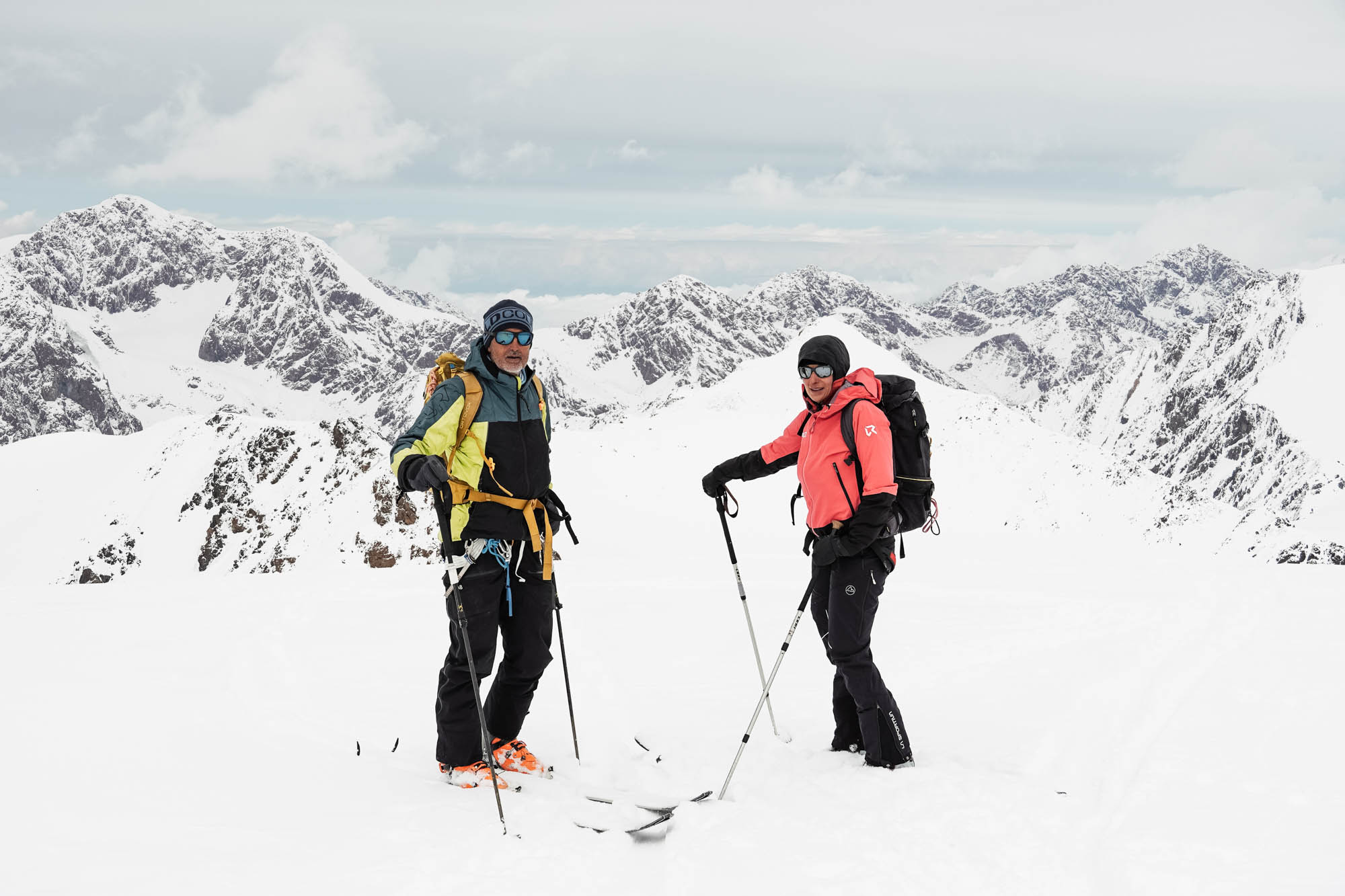
Kyrgyz people & eagle hunter
The vastness of Kyrgyzstan and the very low population density (concentrated largely in cities and sporadic settlements) mean that the territory is still decidedly wild today, therefore populated by rich wildlife even if not so easily spotted. This is how wolves, ibex (an oversized relative of our Alpine ibex), and the legendary snow leopard roam freely in valleys whose access is almost entirely impossible for vehicles… That’s why the vast Kyrgyz prairies are dotted with horses: small, bony, almost always bay-colored, with extremely robust temperament, they survive the harsh winters of Central Asia feeding on the rare semi-dry grasses that the steppe offers and still constitute an irreplaceable means of transportation and sustenance for much of the population. Nomadic herders for millennia, then reduced to forced urbanization by Russian domination, the Kyrgyz are small in stature with Mongolian features: those among them who have not surrendered to city life must manage in this environment that certainly does not facilitate nomadic herding: the presence of wolves and their predation on flocks require population control, which for centuries has been carried out thanks to the noblest of winged predators: the eagle. Captured with special nets at about one year of age, young eagles are trained to hunt wolves (especially cubs but there are reports of attacks on adult subjects as well) or also wild rabbits, hares, in short game from which to derive sustenance.

© Snowder
An animal weighing around five kilograms, proud and aggressive, whose main and deadly weapon consists of powerful talons, the eagle lives at home with the family and shares hunting and competitions with them (eagle hunting is the national sport) until the age of about 11 years, after which it is released so that it can reproduce.
The visit to an eagle hunter family is always a unique and fascinating moment, where you stand open-mouthed following stories of extreme life told with simplicity often by children and young people. A unique and authentic opportunity to bring home memories of beautiful curves traced in distant snows but also of colors and smells of lives so far from our usual experience.
© Snowder
Adriano Ferrero
Guida Alpina dal ’98, da sempre appassionato di viaggi, sci e arrampicata, cavalli e grandi spazi, sport e natura. Dopo anni di viaggi nel mondo partorisce l’idea di Snowder® che, oltre ad un marchio, vuol essere un «modo» di viaggiare, dove la pratica di un’attività sportiva come lo scialpinismo diventa un’ottima «scusa» per mettersi in viaggio, un motivo per scoprire terre lontane – ancor meglio se poco frequentate – genti nuove, nevi e panorami sconosciuti.